



Good English literature dissertation topics pair a small set of texts with a clear critical question, such as climate fiction and ecocriticism, postcolonial rewritings of canonical novels, queer readings of the Gothic, screen adaptation or digital reading cultures. This page lists over 100 literature dissertation topics, medieval to contemporary.
A literature dissertation aims to contextualise themes, ideas, and interests that have grabbed a reader’s interest and attention, giving them a more profound meaning through the movement of time within and outside cultures.
Literature is a comprehensive knowledge of other writers’ views, and to understand them, a student must perform extensive reading and research. A writer coveys their thoughts and ideas through their literary works, including the views and opinions of writers ranging from topics on philosophy, religious preferences, sociology, academics, and psychology.
To help you get started with brainstorming for literature topic ideas, we have developed a list of the latest topics that can be used for writing your literature dissertation.
These topics have been developed by PhD qualified writers in our team, so you can trust to use these topics for drafting your dissertation.
You may also want to start your dissertation by requesting a brief research proposal from our writers on any of these topics, which includes an introduction to the topic, research question, aim and objectives, literature review along with the proposed methodology of research to be conducted. Let us know if you need any help in getting started.
Check our dissertation examples to get an idea of how to structure your dissertation.
Review the full list of dissertation topics here.
Latest English Literature Dissertation Topics by Theme
These English literature topics range from medieval texts to contemporary fiction and reflect current critical debates. Each theme lists six ideas built around named authors and works, which you can adapt by changing the texts, the period or the critical approach.
Medieval and Early Modern Literature Topics
- Female Authority and Marriage in the Wife of Bath’s Prologue and Tale
- Visionary Authority in the Writing of Julian of Norwich and Margery Kempe
- Monstrosity and the Outsider in Beowulf and Sir Gawain and the Green Knight
- Race and Religion on the Early Modern Stage in Othello and The Merchant of Venice
- Revenge, Justice and the State in The Spanish Tragedy and Hamlet
- Satan, Rebellion and Political Liberty in John Milton’s Paradise Lost
Romantic, Victorian and Modernist Literature Topics
- Slavery, Empire and Silence in Jane Austen’s Mansfield Park
- Science, Creation and Responsibility in Mary Shelley’s Frankenstein
- Nature, Labour and Enclosure in the Poetry of John Clare
- Secrecy, Identity and the Asylum in Lady Audley’s Secret and The Woman in White
- Shell Shock and Traumatic Memory in Mrs Dalloway and Regeneration
- Myth and Fragmentation in The Waste Land and Ulysses
Postcolonial and World Literatures in English Topics
- Language Choice and Decolonisation in Decolonising the Mind and the Essays of Chinua Achebe
- Memory of Partition in Train to Pakistan and Ice-Candy-Man
- War, Memory and Testimony in Chimamanda Ngozi Adichie’s Half of a Yellow Sun
- Windrush Migration and Belonging in The Lonely Londoners and Small Island
- Land, Law and Storytelling in Alexis Wright’s Carpentaria
- Colonial History and National Identity in Philippine Fiction in English by Nick Joaquin and F. Sionil José
Gender, Sexuality and Queer Writing Topics
- Female Rage and Domestic Confinement in The Yellow Wallpaper and Jane Eyre
- Masculinity and Emotional Repression in Kazuo Ishiguro’s The Remains of the Day
- Shame and Same-Sex Desire in Oranges Are Not the Only Fruit and Giovanni’s Room
- Maternal Ambivalence in Doris Lessing’s The Fifth Child and Sheila Heti’s Motherhood
- Trans Life Writing from Jan Morris’s Conundrum to Contemporary Memoir
- The Female Body in the Poetry of Sylvia Plath and Carol Ann Duffy
Ecocriticism and Climate Fiction Topics
- Rising Seas and a Transformed Britain in The End We Start From and The Wall
- Landscape, Grief and Recovery in H is for Hawk and The Outrun
- Petrofiction and the Niger Delta in Helon Habila’s Oil on Water
- Climate Policy as Plot in Kim Stanley Robinson’s The Ministry for the Future
- Pastoral Tradition and Rural Labour in the Poetry of William Wordsworth and Seamus Heaney
- Non-Human Narrators and Animal Perspective in Contemporary Fiction
Genre Fiction and Adaptation Topics
- Irony and Fidelity in Film and Television Adaptations of Pride and Prejudice
- The Country House and Social Order in the Detective Fiction of Agatha Christie
- Greek Myth Retold from Women’s Perspectives by Madeline Miller and Pat Barker
- Neo-Victorian Fiction and the Rewriting of the Past in Sarah Waters’s Fingersmith
- Afrofuturism and World-Building in the Fiction of Octavia Butler and N. K. Jemisin
- Rewriting The Tempest in Margaret Atwood’s Hag-Seed
Digital Humanities and Reading Cultures Topics
- BookTok, Reader Recommendation and the Revival of Backlist Fiction
- Stylometry and Authorship Attribution in Collaborative Early Modern Plays
- Fan Fiction as Literary Criticism: Rewriting Canonical Novels in Online Archives
- Audiobooks and Narrative Voice: Listening Compared with Silent Reading
- Digital Mapping of Wessex Settings in the Novels of Thomas Hardy
- Machine-Generated Poetry and the Imitation of Literary Style: A Reader Response Study
Children’s and Young Adult Literature Topics
- Grief and Bereavement in Patrick Ness’s A Monster Calls
- Empire and Childhood in The Secret Garden and Peter Pan
- Disability and the Cure Narrative in Children’s Fiction from What Katy Did to Wonder
- Power, Spectacle and Rebellion in Suzanne Collins’s The Hunger Games
- Refugee Experience in The Boy at the Back of the Class and Other Children’s Novels
- Wordless Narrative and Migration in Shaun Tan’s The Arrival
List Of Free Dissertation Topics On Literature
- How Has The Rise of Afropolitan Literature Reshaped Identity Discourse
- Digital Storytelling and the Evolution of Narrative Form in the 21st Century
- The Influence of Social Media on the Construction of Authorship and the Literary Sphere
- An Analysis of The Growing Use of AI in Literature
- The Representation of Mental Health in Contemporary Literature and How This Is Breaking Stigma and Fostering Empathy
- Food, Hunger and Cultural Identity in Contemporary Literary Fiction
- The Evolution of Male Characters in Literature
- Challenges and Ethical Considerations in Bringing Literature Across Borders
- A Comprehensive Analysis of the Role of Satire and Irony in Literature
- The Convergence of Fantasy and Dystopian Literature
Literature Dissertation Topics To Help You Get Started
Research Aim: This study examines how Shakespeare’s late plays stage forgiveness between rulers, families and generations.
Close reading of three romances, supported by performance history and early modern writing on mercy and authority, will assess whether reconciliation in these plays restores justice or conceals the power of those who grant it.
Research Aim: This study examines how nineteenth-century European novelists imagined social and political change. It will analyse selected novels written around periods of revolution and reform, and will ask how their language and characters shaped readers’ ideas about rights, class and representation.
Research Aim: This study analyses how Victorian novelists write regional dialect and what that speech signals about class, morality and belonging.
Passages of represented speech by Emily Brontë, Elizabeth Gaskell and George Eliot will be compared, using stylistics and social history to ask whether dialect dignifies working-class characters or marks them as other.
Research Aim: This research compares how two novels unsettle fixed gender through narrative voice, one by changing the protagonist’s sex and the other by never stating the narrator’s gender.
Close reading informed by feminist and queer theory will examine pronouns, description of the body and reader expectation in each text.
Research Aim: This research asks whether canonical English literature portrays men more favourably than women.
A selection of poems, essays and novels by earlier and modern writers will be compared through feminist theory, examining how male and female characters are described, what roles they are given and how these portrayals change between periods.
Latest English Literature Dissertation Topics With Research Aims
Research Aim: This study investigates how autofiction blurs the line between author, narrator and character in contemporary novels.
Close reading of Outline and Leaving the Atocha Station will examine self-erasure, reported conversation and irony, and will ask what the form suggests about authenticity and privacy in contemporary literary culture.
Research Aim: This study examines how dystopian novels imagine futures in which fertility becomes a matter of state power.
Novels by Margaret Atwood and P. D. James will be compared through close reading of narration, ritual and religious language, drawing on feminist and biopolitical theory to show how each text links reproduction to citizenship.
Research Aim: This research explores how literary prizes shape which contemporary novels are read, taught and remembered.
Shortlisted and winning novels from the Booker Prize will be studied alongside reviews, publisher marketing and sales reporting to assess how prize culture defines literary value and whose writing it tends to reward.
Research Aim: This study examines how contemporary novelists adapt narrative form to represent climate change, a subject often said to resist realist fiction.
Close reading of Gun Island, The Overstory and Weather will be informed by ecocritical theory, with attention to timescale, non-human agency and fragmented structure, to assess how each novel makes slow environmental crisis readable.
Research Aim: This study analyses how Jean Rhys and J. M. Coetzee rewrite canonical English novels from the position of characters whom the originals silence.
Comparative close reading will examine voice, narrative authority and setting in each pairing, drawing on postcolonial theory to ask whether rewriting challenges the canon or extends its influence.
Research Aim: This research examines how Victorian Gothic fiction represents same-sex desire through secrecy, doubling and the figure of the monster.
Close reading of texts by Sheridan Le Fanu, Oscar Wilde and Bram Stoker will draw on queer theory and the legal and medical discourse of the period to show how the Gothic made forbidden desire narratable.
Research Aim: This project uses computational text analysis to trace how Victorian novels describe the industrial city.
A corpus of digitised novels will be analysed with word frequency, collocation and topic modelling, and the patterns will be tested against close readings of Elizabeth Gaskell and Charles Dickens to evaluate what distant reading adds to literary interpretation.
Research Aim: This study explores how contemporary Black British novelists represent belonging, community and London as lived space.
Close reading of Girl, Woman, Other, NW and Open Water will consider narrative voice, form and the mapping of neighbourhoods, drawing on postcolonial and urban theory to compare how each writer links identity to place.
Trending Literature Dissertation Topics
Research Aim: This study analyses how contemporary novelists imagine artificial minds and the people who depend on them.
Close reading of novels by Kazuo Ishiguro and Ian McEwan will examine narration, empathy and the idea of the human, drawing on posthumanist theory to ask what these machines reveal about care, love and moral responsibility.
Research Aim: This study examines how Victorian novelists represent the death penalty and the condemned prisoner.
Close reading of Oliver Twist and Tess of the d’Urbervilles will be set beside Victorian debates on public execution to show how fiction directed readers’ sympathy and questioned the justice of the gallows.
Research Aim: This research explores how clothing signals rank, taste and ambition in novels of manners.
Scenes of dressing, shopping and display in Northanger Abbey and The House of Mirth will be read alongside histories of fashion and consumption to show how dress helps characters to rise, and exposes them when they fall.
Research Aim: This study examines how contemporary Irish fiction represents what families leave unsaid.
Close reading of Normal People, The Gathering and Foster will focus on dialogue, digital messages, silence and point of view, and will consider how far each writer connects private reticence to class, religion and the legacy of institutional secrecy in Ireland.
Research Aim: This study traces how fiction represents office work and the wish to refuse it.
Herman Melville’s Bartleby, the Scrivener will be compared with Then We Came to the End by Joshua Ferris, examining narration, routine and humour, and drawing on theories of labour to ask what literary form reveals about insecurity, compliance and refusal at work.
Research Aim: This study examines how a translator’s choices of diction, metre and tone reshape a classical epic for present-day readers.
Selected passages from Emily Wilson’s translation of the Odyssey will be compared with earlier English versions, focusing on the language used for enslaved women and for Penelope, and drawing on translation theory.
Research Aim: This research examines how literature represents writing as paid work.
George Gissing’s novel of the literary marketplace will be read beside Virginia Woolf’s essay on women and fiction, using book history and feminist criticism to compare their accounts of income, artistic integrity and the material conditions that authorship requires.
More Literature Dissertation Topics
Research Aim: This study analyses how British young adult novels represent teenagers’ lives online.
Close reading of Radio Silence by Alice Oseman and comparable novels will examine how messages, posts and fan communities are written into the narrative, and how online and offline selves are shown to support or undermine friendship.
Research Aim: Many Indian writers and children’s book authors regard Ruskin Bond as an icon. This research will systematically study the alienated teenage protagonist in Ruskin’s “The Room on the Roof” and how Ruskin evolved the character gradually throughout the novel.
The way Ruskin used this protagonist to reflect his feelings and convey them to the reader.
Research Aim: This study compares how women novelists born in India, Pakistan and Nepal represent women’s choices within family, state and religion.
Close reading of The God of Small Things, Home Fire and fiction by Manjushree Thapa will draw on postcolonial feminist theory to examine narrative voice, transgression and the costs of acting independently.
How Can ResearchProspect Help?
ResearchProspect writers can send several custom topic ideas to your email address. Once you have chosen a topic that suits your needs and interests, you can order for our dissertation outline service, which will include a brief introduction to the topic, research questions, literature review, methodology, expected results, and conclusion. The dissertation outline will enable you to review the quality of our work before placing the order for our full dissertation writing service!
Seventeenth and Eighteenth-Century Literature Dissertation Topics
Research Aim: This study aims to study the evolution of modern British literature compared to eighteenth-century literature. This research will focus on the genre of comedy only. The research will discuss the causes of laughter in the eighteenth century compared to things that cause laughter in modern times.
Research Aim: This study examines why Chaucer’s Miller’s Tale was judged indecent by later readers and how that judgement shaped its reception.
John Dryden’s stated reasons for leaving the tale out of his Fables will be set beside Samuel Cobb’s eighteenth-century verse modernisation, to show what was kept, softened or removed and what that reveals about changing ideas of decency.
Research Aim: This study examines how Francis Bacon’s Essays use aphorism, balance and example to advise readers on power, friendship and ambition.
Close rhetorical analysis of selected essays, including Of Studies and Of Great Place, will be set in the context of seventeenth-century court culture to show how prose style serves practical and political purposes.
Research Aim: This research analyses how early eighteenth-century English plays represented credit, speculation and the new financial market. It will examine selected comedies and their portrayal of stock-jobbers, debt and sudden fortune, and consider what the stage reveals about public attitudes to finance.
Research Aim: This study examines how Shakespeare uses storms, eclipses and disordered weather, and what the sky means to the characters who watch it.
Close reading of three plays will draw on ecocriticism and on early modern beliefs about weather, providence and the stars, and will ask how far present-day ideas of climate change can be applied without anachronism.
Nineteenth-Century Dissertation Topics
Research Aim: This research will look at the introduction of gothic vampire literature and its impact on female members of the gothic subculture. It includes a complete analysis of writing style and the impression it left of the female readers’.
Research Aim: This research aims to view the impact on theatres under the management of women theatre managers. The improvement to theatre shows, along with the hardships faced by some managers, is discussed. The proposed study analyses the categories of theatre plays.
Research Aim: This study traces how American literature developed from early colonial writing to the realist fiction of the late nineteenth century.
A selection of texts from each period will be compared for changes in genre, style and language, to ask how far American writers defined a national literature distinct from British models.
Research Aim: This research aims to analyse women’s position in the early nineteenth and how later Victorian writers used their work to give women a new identity. The method employed by these writers who wrote from a feminist point of view will also be discussed.
Research Aim: This research aims to analyse the form in which the writer reveals their presence to the reader. The methods can be achieved directly or use the characters to replace themselves in the narrative. The study observes the phrases, vocabulary, and situations the writer uses to narrate.
“Complete this short online form and provide as much information as possible to receive instant quotes from our writers specialising in your area of research.”
Order a Proposal
Worried about your dissertation proposal? Not sure where to start?
- Choose any deadline
- Plagiarism free
- Unlimited free amendments
- Free anti-plagiarism report
- Completed to match exact requirements
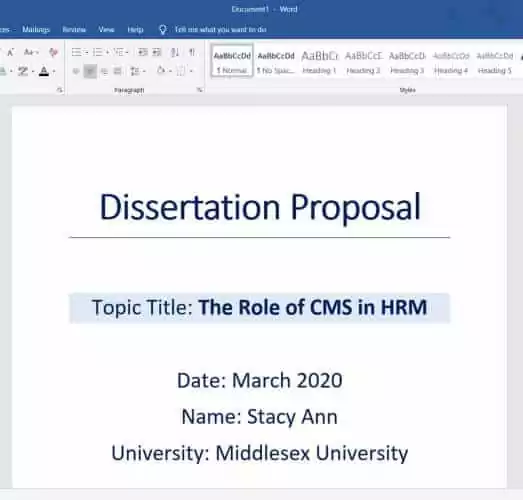
Twentieth Century Dissertation Topics
Research Aim: This research analyses how male and female characters are described in selected twentieth-century novels. It will compare the language used for each, test whether the portrayal of masculinity and femininity changes across the century, and consider what shaped those changes.
Research Aim: This research aims to analyse the impacts of feminism on modern English literature quality. The study will look into the ideology of feminism and how feminist thoughts impact the readers’ views.
Research Aim: This research will study the various works of writers who tackled climate change and other eco-themes in their work. The study discusses the way they portrayed the item along with their views on preventing climate change. Modern work is compared to the work of previous writers who wrote about climate change.
Research Aim: This research will study the role of fathers in modern literature. The way the father character is portrayed in recent times has changed compared to writing in the early centuries. This research will look into the evolution of the father figure over time.
Research Aim: This research examines children’s books written by and about Asian Americans. It will analyse the genres in which these books appear, their style of writing, and the ways they combine American settings with Asian cultural traditions to represent identity for young readers.
Children’s Literature Dissertation Topics
Research Aim: This research analyses how contemporary picture books for young children represent bullying that is linked to race.
A sample of picture books will be examined through content analysis of text and illustration, recording who is shown as victim, bully and bystander, how incidents are resolved, and whether adults or children bring about change.
Research Aim: This research will observe the influence of the various cultural aspects of children’s books. The study will analyse the impact of mixed cultures on literature in a community and how it affects children’s mindsets from a young age.
Research Aim: This study examines how children’s books set out to shape the minds and behaviour of their readers.
Close reading of selected texts, from moral tales to modern picture books, will identify how rewards, punishments and role models are presented, and will consider what each book assumes about the child who reads it.
Research Aim: This research explores how children’s literature has changed since the mid-nineteenth century. It will compare selected Victorian children’s books with contemporary ones, examining differences in vocabulary, sentence structure, modes of storytelling and the view of childhood each reflects.
Research Aim: This study assesses the scholarly debate about whether The Cat in the Hat draws on racial caricature.
Close analysis of the words and pictures will be set beside published criticism of Dr Seuss, and the study will ask what textual analysis can and cannot show about a book’s influence on children’s views of race.
Research Aim: This research examines how far the books children choose to read influence their own early writing.
Stories written by children will be compared with the genre, vocabulary and style of the books they prefer, to identify which features of plot, character and language young writers borrow and how they adapt them.
Research Aim: This research will reflect on the potential use of a school classroom to promote multicultural literature for children. Since a classroom is filled with children of different cultural backgrounds, it becomes easier to introduce multicultural literature. The difficulties and the advantages to society in the incorporation of multicultural literature in classrooms are discussed.
Important Notes:
As a literature student looking to get good grades, it is essential to develop new ideas and experiment with existing literature theories – i.e., to add value and interest to your research topic.
The literature field is vast and interrelated to many other academic disciplines like linguistics, English literature and more. That is why creating a literature dissertation topic that is particular, sound, and actually solves a practical problem that may be rampant in the field is imperative.
We can’t stress how important it is to develop a logical research topic based on your entire research.
There are several significant downfalls to getting your topic wrong; your supervisor may not be interested in working on it, the topic has no academic creditability, the research may not make logical sense, and there is a possibility that the study is not viable.
This impacts your time and efforts in writing your dissertation, as you may end up in a cycle of rejection at the initial stage of the dissertation.
That is why we recommend reviewing existing research to develop a topic, taking advice from your supervisor, and even asking for help in this particular stage of your dissertation.
While developing a research topic, keeping our advice in mind will allow you to pick one of the best literature dissertation topics that fulfil your requirement of writing a research paper and add to the body of knowledge.
Therefore, it is recommended that when finalising your dissertation topic, you read recently published literature to identify gaps in the research that you may help fill.
Remember- dissertation topics need to be unique, solve an identified problem, be logical, and be practically implemented. Please look at some of our sample literature dissertation topics to get an idea for your own dissertation.
How to Structure Your Literature Dissertation
A well-structured dissertation can help students to achieve a high overall academic grade.
- A Title Page
- Acknowledgements
- Declaration
- Abstract: A summary of the research completed
- Table of Contents
- Introduction: This chapter includes the project rationale, research background, key research aims and objectives, and the research problems. An outline of the structure of a dissertation can also be added to this chapter.
- Literature Review: This chapter presents relevant theories and frameworks by analysing published and unpublished literature on the chosen research topic to address research questions. The purpose is to highlight and discuss the selected research area’s relative weaknesses and strengths whilst identifying any research gaps. Break down the topic and key terms that can positively impact your dissertation and your tutor.
- Methodology: The data collection and analysis methods and techniques employed by the researcher are presented in the Methodology chapter, which usually includes research design, research philosophy, research limitations, code of conduct, ethical consideration, data collection methods, and data analysis strategy.
- Findings and Analysis: Findings of the research are analysed in detail under the Findings and Analysis chapter. All key findings/results are outlined in this chapter without interpreting the data or drawing any conclusions. It can be useful to include graphs, charts, and tables in this chapter to identify meaningful trends and relationships.
- Discussion and Conclusion: The researcher presents his interpretation of results in this chapter and states whether the research hypothesis has been verified or not. An essential aspect of this section of the paper is to link the results and evidence from the literature. Recommendations with regard to the implications of the findings and directions for the future may also be provided. Finally, a summary of the overall research, along with final judgments, opinions, and comments, must be included in the form of suggestions for improvement.
- References: Your University’s requirements should complete this
- Bibliography
- Appendices: Any additional information, diagrams, and graphs used to complete the dissertation but not part of the dissertation should be included in the Appendices chapter. Essentially, the purpose is to expand the information/data.
About ResearchProspect Ltd
ResearchProspect is a UK based academic writing service that provides help with Dissertation Proposal Writing, PhD. Proposal Writing, Dissertation Writing, Dissertation Editing, and Improvement.
Our team of writers is highly qualified. They are experts in their respective fields. They have been working for us for a long time. Thus, they are well aware of the issues and the trends of the subject they specialise in.
Related Dissertation Topics
This list focuses on literature. You can also explore these related topic lists:
Frequently Asked Questions
Good literature dissertation topics combine a small group of texts with a precise question. Examples include postcolonial rewritings of canonical novels, queer readings of Victorian Gothic fiction, climate fiction and narrative form, and belonging in contemporary Black British writing.
Topics on adaptation, children’s literature and digital reading cultures also work well at undergraduate and master’s level.
Start with the module, author or period you enjoyed most, then re-read the primary texts and note what puzzles you. Turn that puzzle into a question, choose two to four texts that let you answer it, and identify a critical approach.
Check that enough scholarship exists and that your argument adds something to it.
Most undergraduate dissertations work best with two to four primary texts, which leaves room for close reading. A master’s dissertation may cover more, or treat a single long work in depth.
If you study poems, short stories or essays, select a manageable group linked by author, theme or form, and explain your selection in the introduction.
An undergraduate topic shows that you can build an argument from close reading and criticism. An MA topic is narrower and engages more fully with theory and existing scholarship.
A PhD topic must make an original contribution, often by using archives, neglected texts or a new method, and it has to sustain a book-length study.
Common approaches include feminist and queer theory, postcolonial criticism, ecocriticism, Marxist and historicist readings, psychoanalysis, narratology, adaptation studies and book history. Digital methods such as distant reading are also used.
Choose the approach that helps you answer your question, and apply it consistently instead of listing several theories without using them.
Yes. Complete the free topic form at the end of this page, or on our free dissertation topics page, and a subject specialist will send you a custom topic with an aim and justification.
If you also need a plan, our dissertation topics and outline service starts from £45.





