


UK university entry requirements are the set of academic qualifications, English-language scores, subject prerequisites and supporting documents you must meet to be offered a place — most commonly stated as A-level grades (e.g. AAB), an equivalent UCAS tariff total, an IELTS band of 6.0–7.0, and a strong personal statement. This guide covers exactly what those requirements are, how they differ by study level (foundation, undergraduate, master’s and PhD), how UCAS tariff points and grade equivalents work, the documents and admissions tests you need, and how to read a typical offer so you apply with confidence.
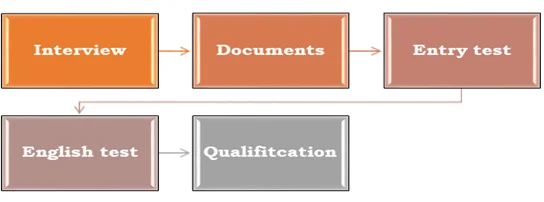
What UK university entry requirements actually mean
Every UK university publishes UK university entry requirements on a course-by-course basis, so two universities offering the same degree can ask for very different grades. In practice, every offer is built from the same handful of components: your academic qualifications and grades, any specific subjects the course demands, an English-language qualification if English is not your first language, supporting documents (personal statement, reference, transcripts), and — for competitive courses — an admissions test or interview.
The UK remains one of the most popular destinations for international students, partly because so many of its institutions rank near the top of global league tables. That demand is exactly why admissions are competitive and why requirements are set carefully: they exist to confirm you can thrive on the course, not to trip you up. The good news is that the system is transparent — once you understand the five components below, you can read any course page and know precisely what you need.
Requirements rise with the prestige of the institution and the competitiveness of the subject. A widening-participation university might make an offer at BCC for a business degree, while medicine at a Russell Group university typically demands A*AA including Chemistry and Biology, plus an admissions test and an interview. Understanding which lever applies to your situation is the difference between a wasted application and a confident one.
Below we work through each component in turn, starting with the academic qualifications that sit at the heart of every offer, then English-language tests, the UCAS tariff, supporting documents, admissions tests and interviews, and finally a worked example of a real offer so you can see how the pieces fit together.
Academic and education requirements by study level
The grades a UK university asks for depend on the level you are applying to. The table below summarises the typical baseline for each study level — but always check the specific course page, because subject and institution can shift these significantly.
| Study level | Typical UK qualification needed | Indicative grades | Typical IELTS |
|---|---|---|---|
| Foundation / pathway year | School-leaving certificate (12 years of schooling) | Pass, with a C/4 in English and Maths | 5.0–5.5 |
| Undergraduate (Bachelor’s) | A-levels, IB Diploma, BTEC or recognised equivalent | BCC to A*AA depending on course | 6.0–6.5 |
| Master’s (taught) | UK Bachelor’s degree (or international equivalent) | 2:2 to 2:1 honours, sometimes a Merit | 6.5–7.0 |
| Doctorate (PhD/MPhil) | Master’s degree plus a research proposal | Merit or Distinction, plus accepted proposal | 6.5–7.5 |
For undergraduate study you will usually need at least two A-levels (most competitive courses expect three) or an equivalent such as the International Baccalaureate or a BTEC Extended Diploma. Universities also expect supporting GCSEs — almost all require a grade 4/C or above in English and Maths, and many science and economics courses set a higher GCSE Maths bar.
For postgraduate study the picture shifts to your degree classification. A taught master’s typically asks for a 2:1 (upper second-class) honours degree, though many programmes accept a 2:2 with relevant experience. A PhD requires a strong master’s, normally at Merit or Distinction, together with a research proposal that an academic supervisor is willing to back. If you are returning to study after time away, requirements are often assessed more flexibly — our university guide for mature students explains how admissions tutors weigh work experience and access courses in place of recent A-levels.
Subject prerequisites and grade equivalents
Beyond overall grades, many degrees require specific subjects at A-level (or equivalent). Engineering and physics demand Maths, and usually Physics; medicine and dentistry require Chemistry and typically Biology; economics at most leading universities requires A-level Maths. Missing a required subject is the most common reason a strong applicant is rejected, so check the prerequisite list before you finalise your A-level choices.
International applicants frequently ask how their qualifications map onto UK grades. The table below gives a broad guide for undergraduate entry; universities publish their own country-specific equivalences, so treat this as orientation rather than a guarantee.
| UK A-level offer | IB Diploma (broad equivalent) | UCAS tariff points |
|---|---|---|
| A*AA | 38–39 points | 152 |
| AAA | 36–37 points | 144 |
| AAB | 34–35 points | 136 |
| ABB | 32–33 points | 128 |
| BBC | 30 points | 112 |
This is also where ambitious applications are won or lost. If you are aiming for an Oxbridge or other highly selective course, you are competing against a field who all meet the grade requirement, so subject super-curricular evidence matters. A common question — “what do I need to get into Cambridge University?” — has a deceptively simple grade answer (typically A*AA or A*A*A depending on subject) but a far more demanding reality: a subject-specific admissions assessment, a strong written submission, and an interview that probes how you think, not just what you know.
Conditional vs unconditional offers
Meeting the published requirements does not mean you have a place yet — it means you are eligible for an offer, and UK offers come in two forms. A conditional offer is made before you have your final results and lists the grades or points you must achieve, for example “AAB including a B in Chemistry”. You confirm your place only once results day proves you have met those conditions. An unconditional offer is made when you already hold the qualifications (common for postgraduate, mature and international applicants applying with completed degrees) and the place is yours outright if you accept.
If you narrowly miss your conditions on results day, you are not automatically rejected: universities can still confirm your place at their discretion, you may be offered an alternative course, or you can use Clearing to find another place. Reading every word of your offer — including the small print on English-language components and GCSE grades — is what tells you exactly what “meeting the requirements” will take. The entry requirements overview diagram earlier in this guide is a useful checklist to keep beside each course page as you compare offers.
English language requirements: IELTS, TOEFL and equivalents
If you are from a country where English is not the official language, you must prove your English proficiency with an approved test before a UK university will confirm your place. The two most widely accepted are IELTS (International English Language Testing System), administered by the British Council, and TOEFL (Test of English as a Foreign Language). Most UK universities require IELTS Academic, and scores are usually valid for two years.
The band or score you need rises with study level. The table below shows typical minimums — note that some courses, particularly in medicine, law and teaching, set higher bars and may require a minimum in every component (listening, reading, writing, speaking), not just an overall average.
| Study level | IELTS Academic (overall) | TOEFL iBT (overall) |
|---|---|---|
| Foundation / diploma | 5.0–5.5 | 60–65 |
| Undergraduate | 6.0–6.5 | 72–90 |
| Master’s (taught) | 6.5–7.0 | 88–100 |
| Doctorate (PhD) | 6.5–7.5 | 90–110 |
Many universities also accept alternatives such as PTE Academic, Cambridge English (C1 Advanced/C2 Proficiency) and the Duolingo English Test for some courses, and most run their own pre-sessional English programmes if you fall slightly short. Always confirm the exact test and minimum score on the course page, because these vary by department and by your home country.
“Choosing the right course and qualifications is one of the most important decisions a young person will make. Entry requirements are there to make sure you can thrive on the course, not to catch you out.” — UCAS guidance for applicants
How UCAS tariff points and the application work
Many universities express their offer in UCAS tariff points rather than specific grades, particularly for courses that accept a wide mix of qualifications. The tariff converts each qualification into a points value — for example, an A* at A-level is worth 56 points and an A is worth 48 — so a course asking for 128 points could be met by ABB at A-level, a Distinction*-Distinction-Distinction at BTEC, or a recognised combination.
Whatever qualification you hold, you apply through UCAS, the centralised admissions service. Your application brings together your grades (predicted or achieved), your personal statement, and an academic reference. Getting the mechanics right matters: missed deadlines and incomplete sections cost places every year. Our step-by-step walkthrough on how to complete your UCAS application covers each field, the October and January deadlines, and how to list up to five choices strategically.
Parents often play a major supporting role through the UCAS cycle, from researching courses to keeping deadlines on track. If you are guiding an applicant rather than applying yourself, our university application advice for parents sets out where your help adds value and where the applicant should lead.
Documents, admissions tests and interviews
Once you meet the academic and language bars, your application is completed and assessed through supporting documents, and for some courses an additional test or interview.
Documents you will typically need
- A valid passport or national ID for identity and visa purposes.
- Academic transcripts and certificates for every qualification you hold.
- An academic reference — usually one, sometimes two — from a teacher or tutor who can speak to your ability.
- A personal statement explaining why you want to study the subject and what you bring to it.
- Proof of English-language proficiency where required.
- A work-experience or employer letter, which strengthens applications for vocational, postgraduate and mature-student routes.
Admissions tests
Competitive courses add a subject admissions test on top of grades. The most common are the UCAT and the BMAT-successor assessments for medicine and dentistry, the LNAT for law (used by many leading law schools and the University of Law for some routes), and the MAT, TMUA or PAT for Maths, Computer Science and Physics at certain universities. These tests are sat before or alongside your application and carry real weight in selection, so prepare for them as seriously as your exams.
Interviews
Not all UK universities interview, but the most selective ones — and almost all medicine, dentistry, veterinary, education and Oxbridge courses — do. An interview assesses how you reason, your motivation for the subject, and your communication, rather than re-testing facts. Treat it as an academic conversation: prepare to discuss your personal statement, read around your subject, and practise thinking aloud.
International and mature-student entry routes
The requirements above describe the standard A-level route, but a large share of UK applicants arrive by another path, and the entry requirements flex to match. International applicants are assessed on country-specific qualification equivalences, plus the English-language scores set out earlier; if you fall just short on grades or language, a foundation or pre-sessional year bridges the gap and feeds directly into the first year of a degree.
Mature applicants — anyone applying at 21 or older — are judged more holistically. Admissions tutors will weigh an Access to Higher Education Diploma, relevant employment, and a compelling personal statement against, or in place of, recent A-levels. Because the evidence is different, the way you present yourself matters more, which is why our guide for mature students walks through how to evidence experience and choose the right access route.
Families supporting an applicant through any of these routes — researching courses, tracking deadlines and proofreading drafts — add real value when they know where to step in and where to let the applicant lead. Our advice for parents sets out exactly that balance across the application cycle.
Whichever route you take, the application itself runs through UCAS on the same timeline, so it pays to know the deadlines: mid-October for medicine, dentistry, veterinary and most Oxbridge courses, and late January for the majority of other undergraduate courses. Missing a deadline is one of the few mistakes the system rarely forgives, so map yours early using our UCAS application checklist and submit with time to spare.
Additional requirements and final tips
Some courses and universities ask for extras beyond the standard list. Keep these on your radar so nothing surprises you late in the cycle:
- A letter of motivation or statement of purpose, especially for postgraduate and international applications.
- A portfolio for art, design and architecture courses, or an audition for music and drama.
- A DBS (criminal records) check and occupational health clearance for medicine, nursing, teaching and social work.
- A research proposal for PhD applications, agreed in principle with a prospective supervisor.
- Specific GCSE grades (often a 4/C, sometimes a 6/B) in English, Maths or a science, depending on the course.
Finally, apply early, hold one realistic insurance choice alongside your firm choice, and never assume two universities want the same thing — a place at one is no guarantee at another. The single most controllable part of the whole process is your personal statement: it is the one element where you, rather than your exam board, decide how you come across.
Make your personal statement stand out
Meeting the grades gets you considered; a sharp, well-structured personal statement gets you the offer. Our expert writers help you showcase your achievements clearly and persuasively.