

Quick Answer
Academic integrity is the foundation that keeps learning, research, and qualifications meaningful — even when AI tools can produce work in minutes. With 86% of students now using AI, the rule has shifted from “don’t use it” to “use it transparently, verify everything, and do your own thinking.” This guide explains the six reasons academic integrity still matters and how to use AI without crossing the line.
If you look back five years, no one was aware of AI. But now, many students are using it to understand topics, make notes, plan essays, and check their writing. Researchers also use AI to sort information and save time during early work. This help is also creating some serious questions. Is AI reliable? Or do we need to stick to the same previous method — academic integrity?
To help you find the real answer, we’ve written this guide. Below, we’ll share the role of academic integrity to understand how important it is.
1. AI Can Support Research Without Replacing Critical Thinking
AI is now a normal part of student life. Research from the Digital Education Council’s Global AI Student Survey 2024 shows just how widespread AI adoption has become in higher education.
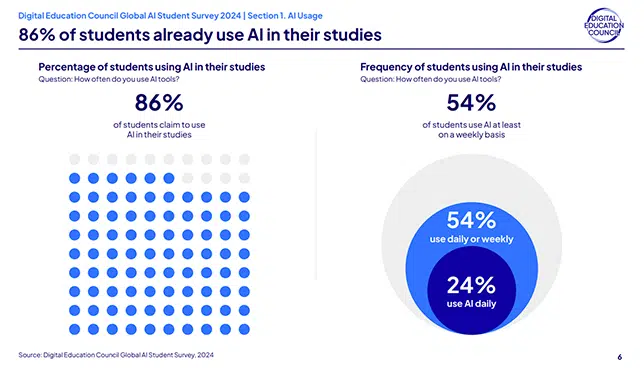
The numbers paint a clear picture of how deeply AI is now embedded in student workflows:
| Student Behaviour | % of Students |
|---|---|
| Use AI tools at some point in their studies | 86% |
| Use AI daily or weekly | 54% |
| Use AI every single day | 24% |
One major reason behind this is that AI helps students complete every task faster, even research. But AI doesn’t stop there. It can show ideas, explain hard points, summarise long notes, and help students understand a topic.
This is especially important as AI-generated content becomes more common. As Edward Tian, CEO of GPTZero, explains:
“As AI-assisted technologies become more widely available to researchers and students, academic environments are facing a major change. These technologies present issues with originality and credit even if they can boost productivity and assist in learning.”
Edward further adds:
“If you want students to get the best results from AI, train them properly on how to use it. They should know when they can use it, how much they can use it, and when they need to mention it. Academic integrity becomes easier to protect when teachers can see how the work was done and students still do their own thinking.”
2. Academic Integrity Protects the Value of Learning
Academic honesty maintains the focus on actual learning. Students still need to read, think, and write on their own. But AI can help them learn concepts more quickly and save time.
Students Learn Better When They Do the Work
Students learn a subject step-by-step through assignments, essays, projects, and tests. They retain the lesson longer when they solve issues on their own, write in their own language, and verify their own sources. On top of that, students gain confidence because they’re aware they’re capable of doing the task without entirely relying on a tool.
AI Can Guide Students, But Students Still Need to Think
AI can help students understand a difficult topic, plan their ideas, or check a rough draft. Still, students need to do their own reading, thinking, and final editing. When AI handles most of the work, the assignment gets finished — but the learning doesn’t.
“Tools can make work easier, but they cannot do the learning for you. Even in marketing, a tool can help with speed, but someone still needs to understand the audience, shape the message, and make the right call. Education works the same way. Students get real value when they understand the thinking behind the work.”
Honest Work Helps Knowledge Stay Longer
Staying honest and loyal with the work is hard. But academic integrity helps students stay honest with their work. It pushes them to submit answers they actually understand and can explain in their own words.
3. Academic Honesty Gains Trust in Research and Scholarship
Trust is everything in education — don’t take it lightly. But in many cases, AI fails. Teachers need to be sure that students are doing their own assignments. Researchers need to trust the studies they read. And readers must accept that the information given in an academic work is accurate and truthful.
When there is trust, people are able to focus on the concepts. Teachers can provide helpful feedback. Researchers can test new discoveries. Students can gain knowledge through honest and transparent labour. If there’s no trust, it becomes difficult to check which information is safe to use.
“Trust is built when people can see care, accuracy, and patience in the final work. Whether someone is reviewing a student paper or a detailed product, they want to know the result was created honestly and not rushed through shortcuts.”
4. Accurate Attribution Remains Essential
Citing original sources has always been a part of legitimate academic work, and AI does not alter this. Whether the information comes from a book, journal article, research paper, website, or course material, readers should be able to pinpoint its original source.
Citations make it easier to verify the work. A teacher can examine the source, comprehend how the student developed the argument, and identify whether the argument is supported by the facts.
“People make better decisions when they can see where the information came from. Even in real estate, nobody wants to rely on a claim without records, comps, or clear details behind it. Academic work is similar — credibility depends on being able to trace the facts back to the source.”
5. AI-Generated Errors Can Create Academic Risks
If you’re using AI right now, you might have noticed that even when AI gives wrong information, it presents it like it’s accurate. You can only find the mistake when you double-check the real source. This is bad for students who use AI without verifying the facts.
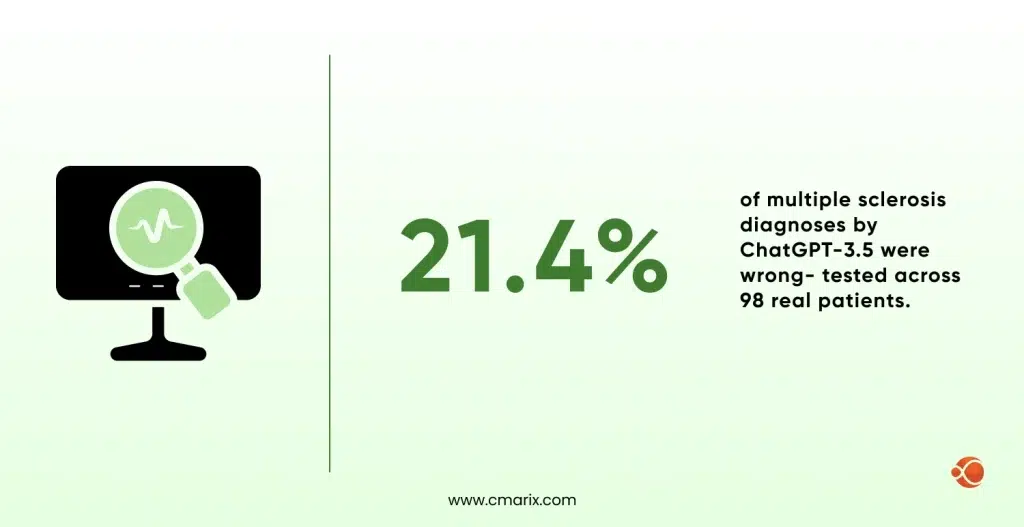
A test showed that ChatGPT-3.5 gave wrong multiple sclerosis diagnoses in 21.4% of cases across 98 real patients. This shows why every student needs to be careful when using AI. Other parts of education are also facing the same problem — many students add sources that offer no proof, include weak points, or use incorrect facts. But many people assume that if the writing reads well, the information must be good. That’s a big myth. You have to check everything and double-check what’s accurate.
Verifying your work is easier than students think. Simply open the sources, read the data, and compare it with information from additional sources. If students have made mistakes, they’ll find them by checking the source themselves.
✓ Verification Checklist Before You Submit AI-Assisted Work
- Verify every statistic against its original source (not just AI’s restatement).
- Open every cited paper or article and confirm it actually says what AI claims it says.
- Rewrite AI-suggested phrasing in your own voice so it reflects your understanding.
- Cross-check facts against at least one independent source before including them.
- Disclose AI use wherever your institution requires it.
- Keep a working draft history — your tutor can see the work was actually yours.
6. Integrity Helps Students Develop Skills They Will Use Beyond School
Even after graduation, students often continue to exhibit the habits they learned in school. Research skills, writing fluency, problem-solving ability, communication, and independent thought are beneficial for almost any career. To develop these skills, academic integrity is important.
When they do their own work, students learn how to find information, review sources, organise ideas, and express their opinions clearly. These experiences prepare them to deal with obstacles in their everyday lives and at work.
“If you’ve done real work and put in good effort, you will have accurate data. And when another person tries to verify the data you give, the results feel more accurate and credible, because they’re checking the facts from someone’s experience. I’ve seen the same thing in link building — you must know which sources are accurate and can be checked later.”
AI as Assistant vs AI as Replacement: What’s the Difference?
| ✓ AI as Assistant (Academic Integrity Intact) | ✗ AI as Replacement (Academic Misconduct) |
|---|---|
| Asking AI to explain a difficult concept | Copy-pasting AI-generated essays as your own |
| Using AI to brainstorm an outline that you then write yourself | Letting AI write your entire literature review unchecked |
| Running AI grammar/style checks on your draft | Submitting AI-fabricated citations without verification |
| Asking AI to summarise sources you’ve read | Pasting AI output into your dissertation chapter |
| Disclosing AI use where your institution requires | Hiding AI involvement from your tutor or supervisor |
Final Thoughts
Since every second student is using AI, there is a strong chance AI is here to stay. Work that takes 2–3 days can be done by AI in minutes. Students can research even the longest topics in just hours. Sure, AI has flaws — even AI tools themselves admit they can make mistakes. But that doesn’t mean you should stop using it. Use it as an assistant.
If you’re not fully sure about AI, academic integrity is what protects you. It helps students build knowledge they can actually use. It increases trust between students, teachers, and researchers. When students are honest about their work, education stays fair and research stays reliable.
Key Takeaways
- 86% of students already use AI — but adoption isn’t permission to outsource learning.
- AI is a research partner, not a research replacement.
- 21.4% of ChatGPT-3.5 medical diagnoses were wrong in one peer-reviewed test — always verify facts independently.
- Citations and source attribution remain non-negotiable, even when AI helped you find a source.
- The thinking skills you build through honest work are exactly the skills employers value after graduation.
FAQs
Why do students need academic integrity when using AI?
Students need academic integrity because they should understand the work they submit. AI can help with ideas, notes, and planning, but students still need to read, think, and write in their own words. This helps teachers trust the work and helps students learn the topic properly.
Can students use AI for academic writing?
Yes — if their school or teacher allows it. They can use AI to understand a topic, make an outline, or review a draft. They should not copy AI content and submit it as their own. The final work should still come from the student.
How can students use AI without cheating?
Use AI as a study helper. Ask it to explain a topic, organise notes, or suggest questions. After that, check the facts and write the answer yourself. If the school requires you to disclose AI use, do so clearly.
Why should students check AI answers?
AI can give wrong information with confidence. It can also produce weak claims or sources that don’t actually prove anything. Always open the original source, read it yourself, and compare it with other trusted sources before adding the information to your work.
Does AI remove the need for citations?
No. Students still need citations. When you use a fact, quote, idea, or research from another source, you should give credit — even if AI surfaced the source for you. Citations help teachers and readers see where the information came from and demonstrate that you verified the source.