




For years, you’ve been color-coding, summarising, and rewriting lectures until they made sense. Those notes that are in your Google Drive or hidden away in a folder on your desktop? They have value. Money that is real, not “maybe one day” money.
Selling study notes online is now one of the easiest ways for students to make extra money. You don’t have to pay anything to start, work extra hours, or learn any new skills. The only thing you need to know is which platform is worth your time in 2026.
We looked into all the major options, checked the current payout structures, and got rid of the ones that made false or outdated claims about how much they could make. This is what is working right now.
A Quick Word About the Law Before You Sell
Your study notes are your own intellectual property. You have the right to sell them in most countries. That being said, it only takes five minutes to look up your university’s policy on academic integrity. Some schools don’t allow students to use class materials for business purposes, especially if their notes are very similar to a professor’s slides or a licensed textbook. As a general rule, you should rephrase, organise, and add your own structure. It’s always safe to write down your thoughts.
The 7 Best Platforms to Sell Study Notes Online in 2026
1. Docsity — Best Overall for Reach and Passive Income
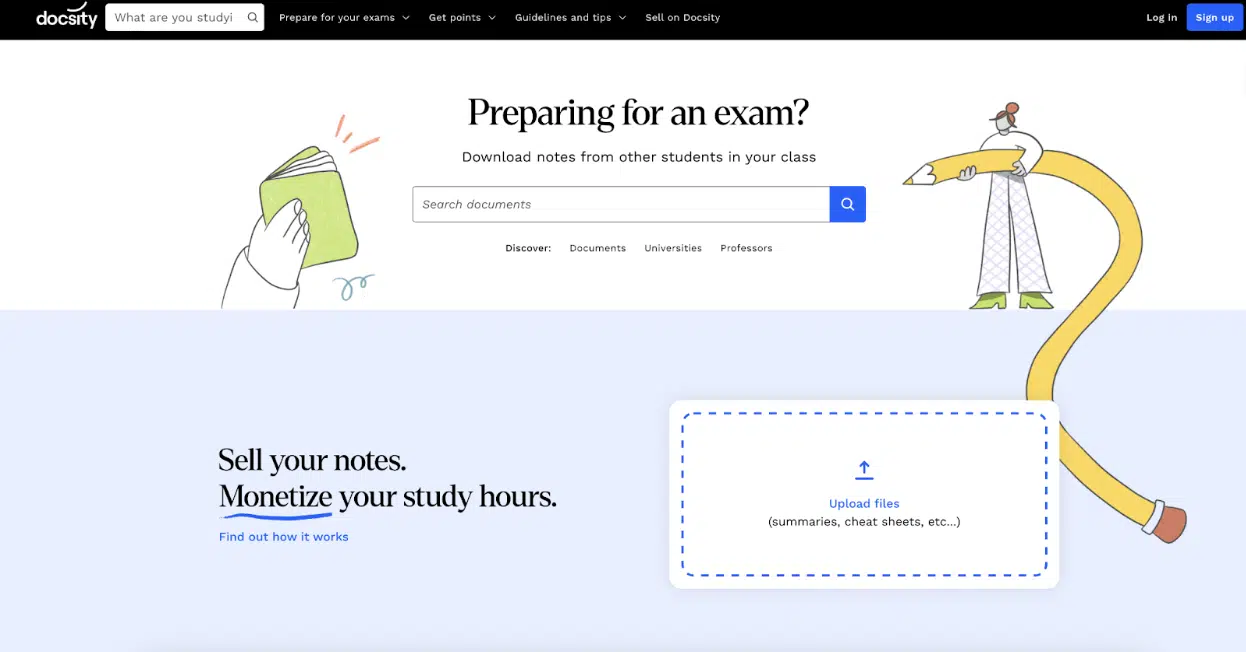
Docsity is the best platform to sign up for if you can only do one. It has more than 20 million registered users in more than 190 countries, making it the biggest academic document marketplace in the world. It also works like a well-oiled machine for making money.
It’s easy to understand the model. You can upload your notes to the Docsity Store, set a price in “premium points,” and get paid every time someone downloads them. You get what you see, with no hidden fees or confusing revenue splits. And since buyers are already looking at the platform with their premium subscriptions in hand, your notes get natural exposure from the start.
Docsity accepts PDFs, PowerPoints, Word documents, and more. It has information on a wide range of topics, including law, medicine, engineering, and business. There is a market for your work here, whether you are a first-year student or finishing your master’s degree. PayPal handles payouts.
Best for: Students who want a lot of people to see their work and make money without having to do their own marketing.
2. Stuvia — Best for Building Long-Term Reputation
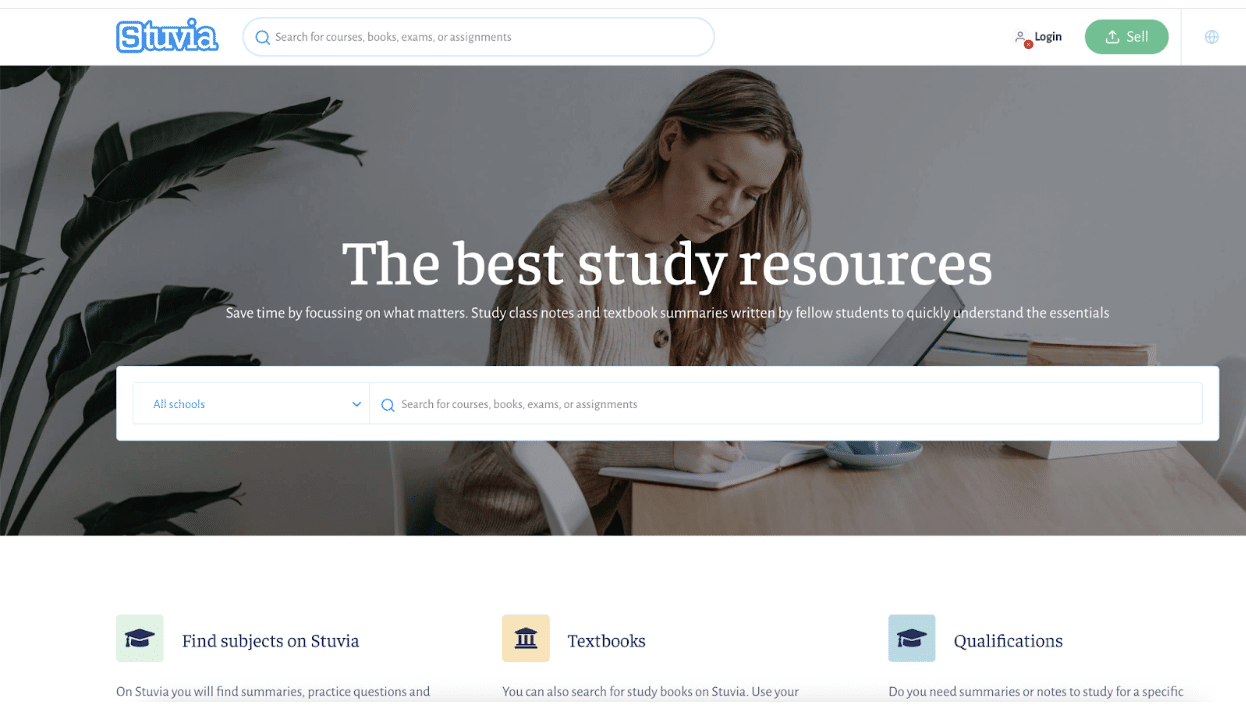
For students who want to do more than just upload something once, Stuvia is the place to go. With more than 700,000 sellers in over 127 countries, it’s a well-known marketplace where building a profile pays off over time.
You can set your own prices, but they have to be at least $2.50. Stuvia takes 30% of each sale. In exchange, it takes care of all the marketing, such as letting students in your subject area know when you publish something new, which is very helpful for getting things off the ground. Sellers who always upload good content say that their first sales happen in just a few days. Once you reach the $10 threshold, you will get paid every week, and you can sell your notes as long as you want.
One thing to keep in mind is that Stuvia says it owns any flashcards you make on its site, but you still own everything else. Here, you can sell your notes, study guides, and summaries. Keep your flashcard sets somewhere else.
Best for: Students who study popular subjects, want to make a name for themselves with their notes, and don’t want to have to do any marketing themselves.
3. DocMerit — Best Payout Ratio in the Industry

If getting the most money into your account is the most important thing to you, you should check out DocMerit. It pays out 85% of each sale, which is the highest commission rate in the notes-selling business, and it sends your money to your PayPal account within 48 hours.
You pick the price (at least $1.50), upload your notes for free, and DocMerit takes care of the rest. The platform is especially good for college-level class notes, study guides, and summaries of subjects. On DocMerit, popular documents have sold more than 100 times. This means that one good upload can bring in money over and over again with no extra work. Trustpilot gives the platform a 4.1-star rating, and it has a loyal community of students in the US, Europe, and other parts of the world.
Best for: Sellers who want to make the most money on each sale and get paid quickly and reliably without having to give up a large part of their income to a high commission.
4. Studypool — Best for High-Volume Document Sellers
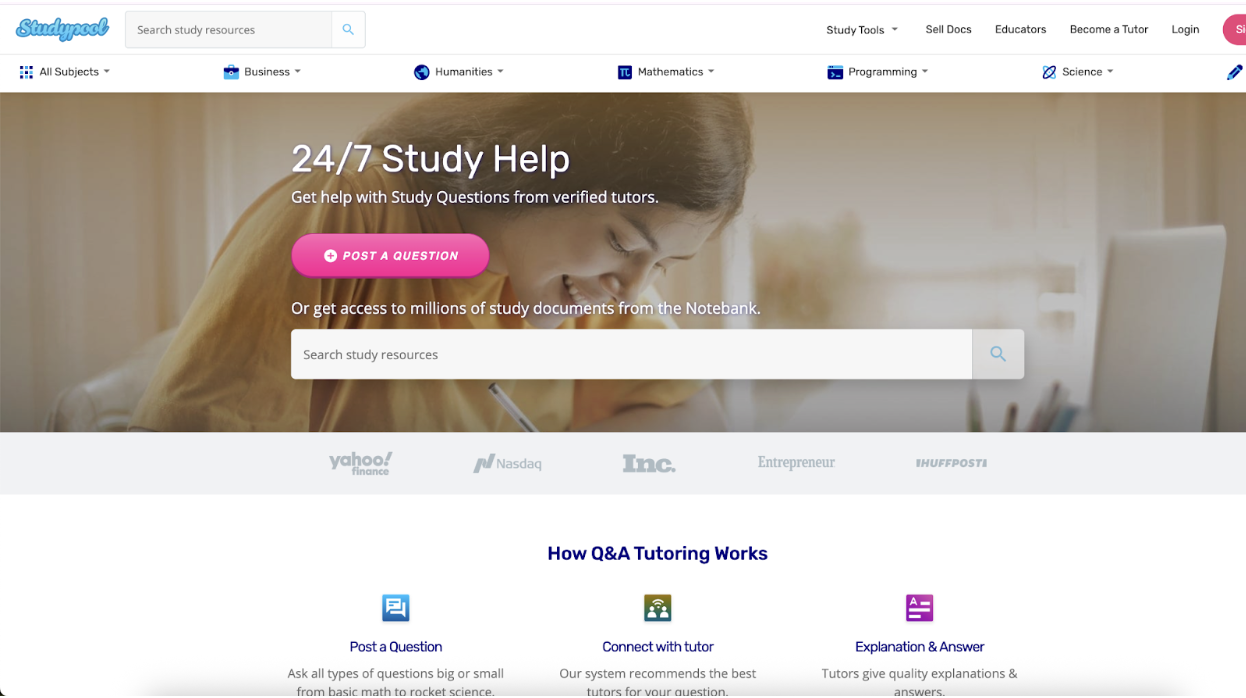
Studypool has become one of the most popular places for students to buy and sell documents because it has a lot of old notes. The pitch is simple: upload your research papers and get paid every time a student looks at them, up to $10 per view.
Some platforms make it seem like earnings are a gamble, but Studypool sellers consistently report making hundreds of dollars in their first few months, especially those who upload regularly across many subjects. The platform has tens of millions of students and covers a huge range of academic fields, including business law, computer science, nursing, and engineering. Before going live, documents are checked for quality (usually within 48 hours), and payments are made through PayPal or Western Union.
It’s important to note that Studypool also has a tutoring side, so you can make money by answering questions as well as selling documents. This means you can have two sources of income from one account.
Best for: Students who have a lot of notes on different subjects and want a busy marketplace and quick document approval.
5. Payhip — Best for Selling Directly and Keeping Full Control
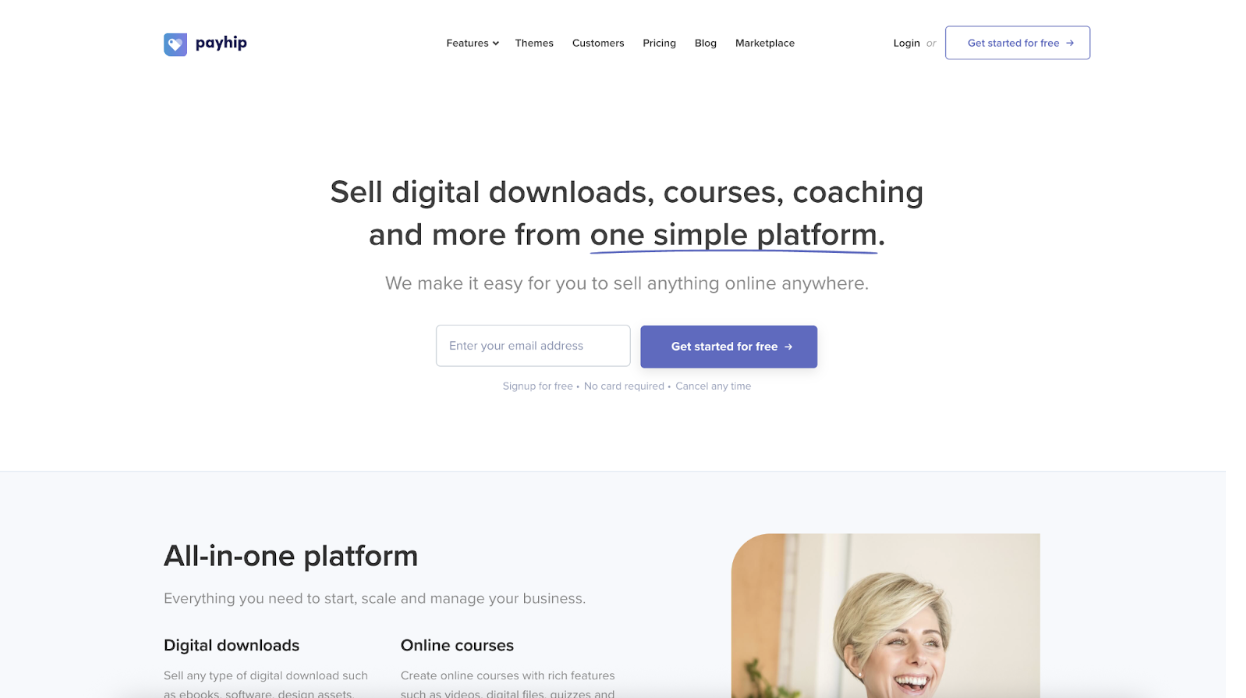
All of the other platforms on this list put your notes in their marketplace. Payhip makes you the marketplace.
You can make your own store with Payhip, set your own prices, and sell directly to students through your own website or a free Payhip-hosted store. The free plan has a 5% transaction fee (which goes down to 0% on paid plans), and the platform automatically handles digital delivery. It also accepts payments in dozens of international currencies through PayPal and all major credit cards.
The downside is that Payhip doesn’t bring you any organic traffic; you’ll have to do your own marketing through social media, student groups, or course communities. But for students who already have an audience or are willing to spend a few hours promoting, the economics are unbeatable. There are no limits on storage or bandwidth.
Best for: Students who already have a following and are active in student Facebook groups, Discord servers, or Reddit communities and want to keep most of their money.
Platform Comparison at a Glance
| Platform | Commission to Seller | Payout Method | Best For |
| Docsity | Percent from each sale | PayPal and most credit cards | Passive income, global reach |
| Stuvia | 70% (you keep) | Credit/debit cards, PayPal, and site-specific “Stuvia Credit” (weekly) | Brand building, repeat buyers |
| DocMerit | 65%–85% (you keep, based on volume) | PayPal (48hrs) | Max earnings per sale |
| Studypool | Up to $10/view | PayPal, Payoneer, Western Union | High-volume document selling |
| Payhip | 95%+ (free plan) | PayPal, Stripe | Direct sales, full control |
Tips to Actually Make Sales
There are usually three things that make the difference between notes that sell once and notes that sell a hundred times:
You might not think formatting is important, but it is. Headings that are easy to read, numbered sections, clear diagrams, and fonts that are easy to read are what make something “useful” instead of “actually bought.” Students who buy notes don’t have a lot of time, so make yours easy to scan.
Your title is a result of a search. Students look up information by subject, course code, and professor name on all platforms. In your title and description, include all three.
Upload during the time of the exam. 4 to 6 weeks before finals, traffic on all platforms goes up. If you can time your uploads to hit these windows, your early sales will keep going up.
Sell on more than one platform at the same time. You still own the copyright to your notes on most platforms, except for Stuvia’s flashcard feature. You can put the same document on Docsity, Stuvia, and DocMerit all at the same time.
Table of Contents
Frequently Asked Questions
Yes, most of the time. Your notes are your own ideas. If your university has a specific rule against it, or if your notes copy copyrighted material (like direct quotes from textbooks) instead of your own original work and synthesis, then you can’t do it.
It depends a lot on the subject, the platform, and how often you upload. Most people who sell things casually make between $50 and $200 a month. Students who upload regularly to a lot of different sites and on popular topics can make $500 to $1,000 or more a month.
Not on most platforms. Any student can send notes to Docsity, Stuvia, DocMerit, Studypool, and Payhip.
Yes. You still own your notes on almost all of the platforms listed here, except for Stuvia flashcards. Listing on more than one site will help you get more exposure and make more money.
Nursing, law, business, engineering, and accounting are the fields that tend to make the most money. Calculus, organic chemistry, and physics are examples of STEM subjects with standardised content that also sell well because the material doesn’t change much from year to year.
DocMerit pays within 48 hours of a sale, Stuvia pays once a week, and Docsity pays on request via PayPal once you reach the minimum amount.





