


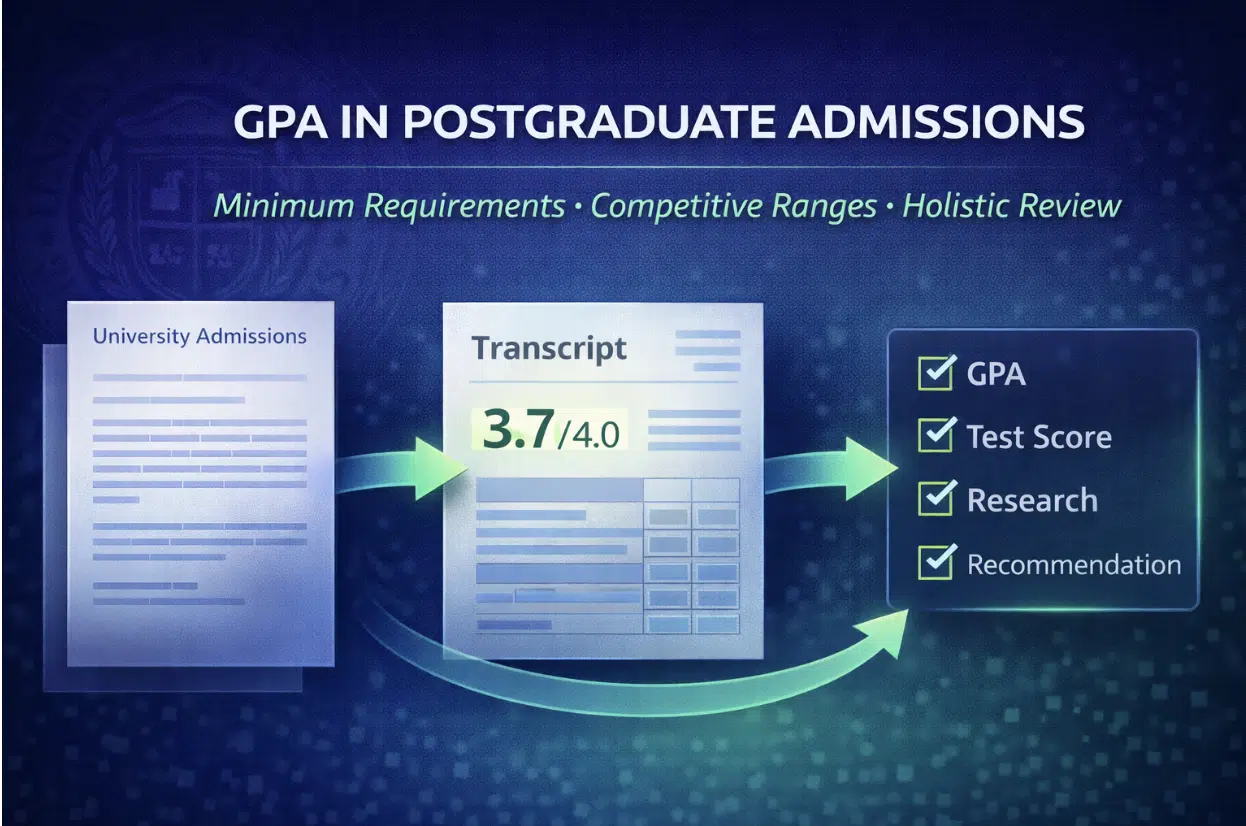
A Grade Point Average represents the numerical average of grades earned across courses within an academic program. Most universities calculate GPA on a 4.0, 5.0, or 10.0 grading scale depending on the country and institution. A cumulative GPA reflects performance across all completed semesters. A semester GPA reflects performance within a single academic term.
Universities record GPA on official transcripts. Academic standing classifications such as distinction, first class, or honors are frequently tied to GPA thresholds defined by institutional regulations.
Cumulative GPA vs Semester GPA
A cumulative GPA includes all completed coursework from the beginning of the program. A semester GPA includes only the courses taken in a particular term. Scholarship committees and internship recruiters generally review cumulative GPA because it reflects sustained performance over time. Some institutions evaluate improvement trends by comparing early semester GPA with later semester GPA.
Percentage Conversion and Grading Scales
Many universities require conversion of CGPA into percentage format during application processes. Conversion formulas are defined by the issuing university. Some institutions use fixed multipliers while others apply grade band conversion tables. International admissions offices frequently rely on credential evaluation services to standardise GPA across different national grading systems.
Students who need to understand their academic standing before applying for scholarships or internships frequently use a GPA calculator to estimate cumulative averages, semester performance, and projected outcomes based on future grades. Accurate calculation supports better planning during application preparation.
GPA and Scholarship Eligibility
Merit Based Scholarships
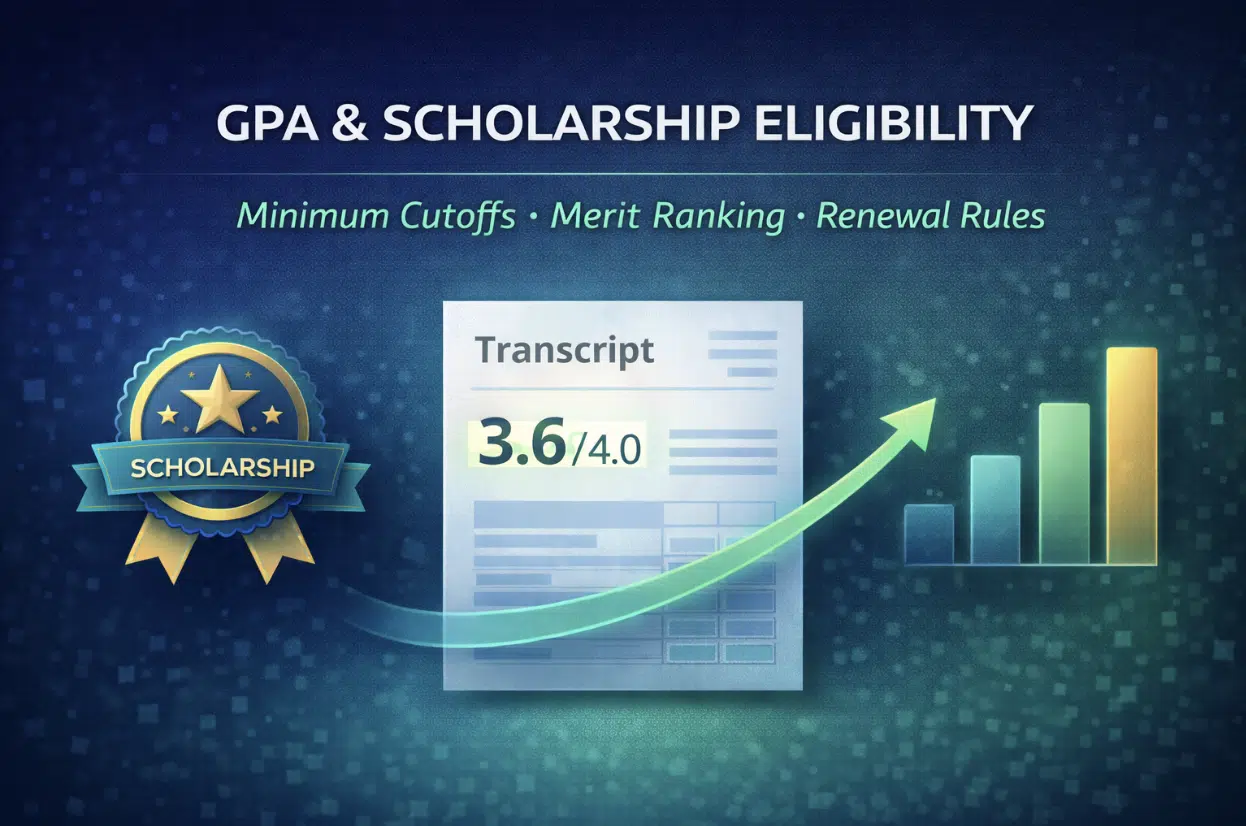
Merit based scholarships typically specify a minimum GPA requirement in official eligibility guidelines. Universities may set cutoffs such as 3.0, 3.5, or equivalent percentage benchmarks. Competitive institutional scholarships often rank applicants by GPA before reviewing additional achievements.
Scholarship renewal commonly depends on maintaining a defined GPA threshold each academic year. Students who fall below the required GPA may receive probationary status before funding is reduced or withdrawn.
Performance Based Grants and Financial Aid
Some need based grants require recipients to maintain satisfactory academic progress defined through GPA. Federal and institutional aid programs in several countries specify minimum GPA standards to remain eligible. Academic probation may temporarily affect access to certain forms of financial support.
Departments may issue conditional awards to students whose GPA is near the eligibility threshold. Continued funding may depend on meeting GPA requirements in subsequent semesters.
Scholarship Shortlisting Process
Many scholarship selection processes use GPA as the first screening filter. Applications below the stated GPA minimum are usually excluded from detailed review. In highly competitive programs, small GPA differences can influence ranking order among shortlisted candidates.
Some scholarship models assign weighted scores to GPA alongside leadership records, research participation, and community service. In academic excellence awards, GPA may carry the highest numerical weight in evaluation matrices.
| Scholarship Type | Minimum GPA | Renewal Requirement | Evaluation Weightage |
| Institutional Merit Award | 3.5/4.0 | Maintain 3.5 | High GPA Weight |
| Departmental Scholarship | 3.2/4.0 | Maintain 3.0 | Moderate GPA Weight |
| Private Foundation Grant | 3.0/4.0 | Annual Review | Combined Criteria |
GPA and Internship Opportunities
Corporate Internship Screening
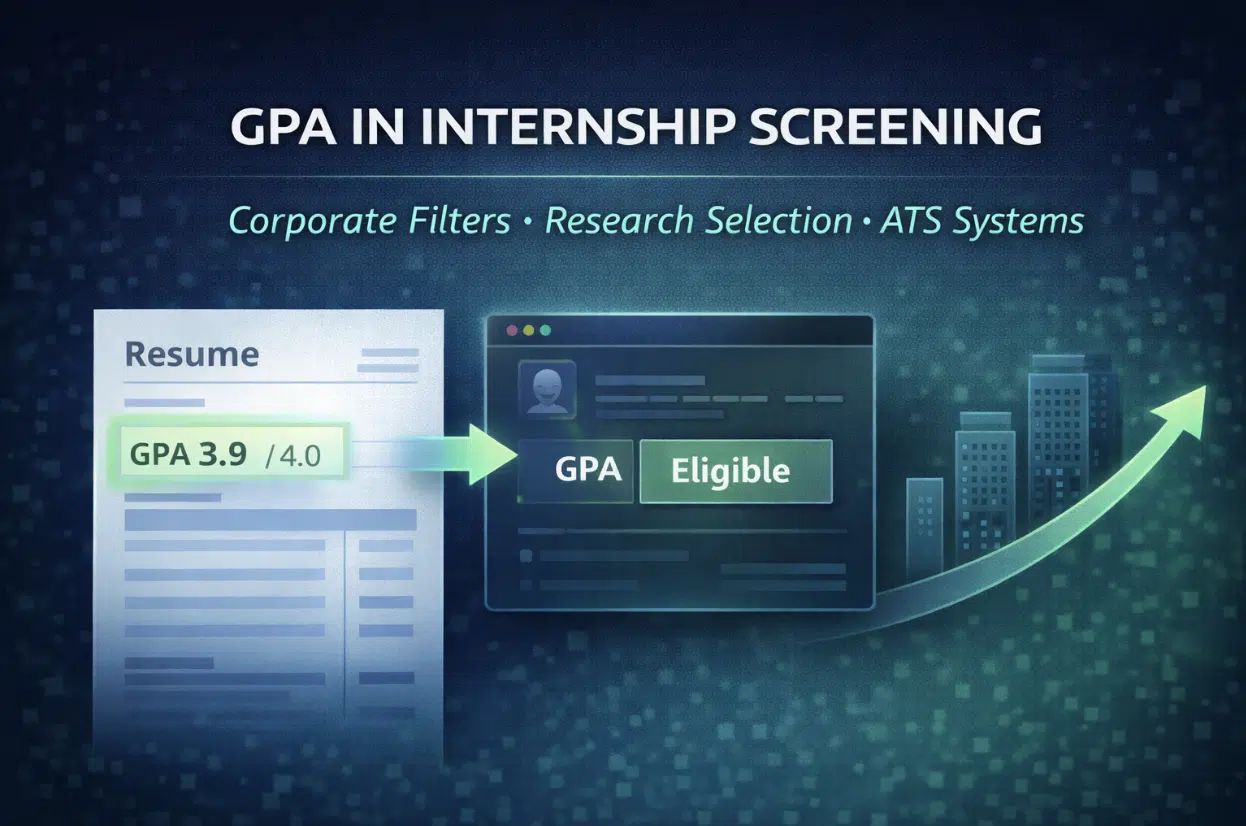
Large corporations frequently publish GPA eligibility criteria in campus recruitment announcements. Some companies set minimum GPA requirements for application submission through university placement cells. Automated applicant tracking systems may filter resumes below defined GPA thresholds.
In highly competitive industries such as finance, consulting, and engineering, GPA is often used as a standardised academic indicator during the initial screening stage. Recruiters may request official transcripts during final selection rounds.
Research Internships
Faculty supervised research internships commonly require a strong academic record in relevant coursework. Departments may specify minimum GPA in core subjects for research assistant roles. Funded undergraduate research programs sometimes include GPA eligibility benchmarks in official program guidelines.
Principal investigators often review transcripts to evaluate consistency in subject performance. Academic performance in methodology and analytical courses may receive closer attention during research internship selection.
Competitive Internship Programs
Government sponsored internship programs sometimes list minimum GPA criteria in public notifications. International exchange internships may request academic transcripts as part of eligibility documentation. In structured internship competitions, GPA may influence advancement to interview stages.
In skill intensive internship roles such as design, development, or media production, recruiters may balance GPA review with portfolio assessment. Referral based internship selections may reduce strict GPA dependence but transcripts are still commonly reviewed.
- Large companies using automated resume screening systems
- Scholarship linked internships tied to academic performance
- Highly competitive national internship programs
- Early year campus placements with limited applicant filtering
- Startups focusing on demonstrated project skills
- Creative roles emphasising portfolios over transcripts
Academic Positioning Scorecard
Undergraduate academic positioning is frequently assessed through multiple indicators. GPA remains a primary measurable academic metric in this evaluation.
- GPA strength
- Skill alignment with role
- Research exposure through projects
- Faculty recommendations
In scholarship and internship contexts during undergraduate study, GPA operates as a formal academic benchmark recorded on institutional transcripts. It functions as an initial eligibility filter in many structured academic and professional selection systems.
GPA as a Core Factor in Postgraduate Admissions
University Minimum GPA Requirements
Postgraduate programs commonly publish minimum GPA requirements in admission brochures and official websites. Domestic master’s programs often specify a threshold such as 3.0 on a 4.0 scale or an equivalent percentage score. International universities may require credential evaluation when applicants come from different grading systems.
Professional programs such as engineering, business administration, law, and health sciences frequently state minimum academic performance standards. Applications that fall below the declared GPA requirement may not proceed to full review in competitive admission cycles.
GPA in Competitive Programs
Highly selective postgraduate programs evaluate GPA as an indicator of sustained academic discipline. MBA programs typically review undergraduate GPA alongside standardised test scores and professional experience. Research focused master’s and doctoral programs examine GPA in subject specific coursework.
STEM disciplines may emphasise performance in quantitative and analytical subjects. Humanities and social science programs often examine consistency in writing intensive and theory based courses. In certain institutions, departmental GPA in major subjects is reviewed separately from overall cumulative GPA.
| Program Type | Competitive GPA Range | Standardised Test Requirement | Additional Academic Criteria |
| Research Master’s | 3.3 – 3.7 | GRE or equivalent | Research Proposal |
| MBA Program | 3.0 – 3.6 | GMAT or equivalent | Work Experience |
| Direct PhD | 3.5 and above | GRE in some cases | Publications or Thesis |
Admission Shortlisting Mechanics
Automated Application Screening
Many universities use digital application management systems that categorise applicants based on minimum eligibility requirements. GPA below the declared cutoff may result in automatic rejection before departmental review. Some institutions allow conditional review if other components such as entrance test scores are strong.
Admissions offices may generate applicant rankings based on academic metrics before forwarding files to faculty committees. GPA often forms a quantifiable base score in this ranking process.
Holistic Review vs GPA Driven Selection
Certain universities apply a holistic review model in which GPA is evaluated alongside statements of purpose, letters of recommendation, research experience, and extracurricular involvement. Even in holistic systems, GPA remains a recorded academic reference point.
Faculty committees may examine grade trends across semesters. An upward academic trend in later years may be interpreted as improvement in academic maturity. Conversely, a decline in GPA in final semesters may prompt clarification through application essays.
GPA and Funding in Postgraduate Studies
Assistantships and Fellowships
Teaching assistantships and research assistantships often require a minimum GPA for eligibility. Departments may restrict funding opportunities to students who meet academic performance standards. Fellowship awards tied to merit commonly consider GPA as a measurable academic indicator.
Some graduate schools impose probation policies if postgraduate GPA falls below defined limits during the program. Continued financial support may depend on maintaining satisfactory academic progress.
International Scholarships and Exchange Programs
Government funded postgraduate scholarships frequently define academic percentage or GPA benchmarks in public notifications. Exchange programs between universities may require students to maintain a minimum cumulative GPA before approval.
Merit based international awards evaluate transcripts to verify academic consistency. In competitive global scholarship programs, GPA may act as a comparative academic reference across applicants from different institutions.
Academic Recovery and Improvement Strategies
Addressing Early Low GPA
Students who experience low GPA in early semesters may present an improved academic trajectory in later terms. Admissions committees sometimes review final year GPA separately when assessing readiness for postgraduate study. Explanation of academic circumstances is commonly included in personal statements when significant grade variation exists.
Institutions may calculate major GPA independently from cumulative GPA. Strong performance in core discipline courses can influence departmental decisions during admission review.
GPA Conversion and Transcript Evaluation
Applicants from universities using a 10 point CGPA scale may be required to convert scores into percentage or 4.0 scale equivalents. Conversion methods are defined by issuing institutions or credential evaluation agencies. International application portals often request official transcripts directly from universities to verify GPA accuracy.
Credential evaluation services may standardise GPA across different national education systems for fair comparison during admissions processing.
The Role of GPA in Long Term Academic Positioning
GPA remains part of academic records even after graduation. Doctoral program applications, research grants, and certain academic employment processes may request official transcripts. Academic honors and distinctions recorded on transcripts are derived from GPA performance during degree completion.
In structured academic environments, GPA functions as a documented indicator of prior academic achievement. It forms part of the academic profile reviewed in scholarship renewals, internship placements, and postgraduate admissions.
Table of Contents
Frequently Asked Questions
Competitive GPA ranges differ by program and institution. Research intensive programs commonly expect higher GPA benchmarks compared to course based programs. Official university admission pages specify required minimums and recommended academic ranges.
Some postgraduate programs apply holistic review models. Research publications, conference presentations, and faculty recommendations may influence evaluation. However, minimum GPA eligibility requirements must still be satisfied in many institutions.
Many universities review cumulative GPA. Certain departments also examine GPA in major subjects separately. Admission guidelines often clarify whether subject specific performance is evaluated.
Professional experience may strengthen postgraduate applications. Academic transcripts remain mandatory in most admission systems. GPA continues to appear as part of formal academic documentation even after several years of employment.