A real Undergraduate history dissertation sample, free to read in full below — get one written for your own title.
Type
Dissertation
Subject
History
Level
Undergraduate
Word count
10,065
Quality
2:1 standard
To the Kings most excellent Majesty,
The Humble Petition of Henry Abby, Richard Jones, and William Maydman together with sixtie two more poore Captives in Tunis and Algier from the Turkish Monarchy,
By the advantage and greater numbers of our continual enemies the Turks (after a deadly conflict) your miserable subjects have been taken and left the remainder of many other of our now dead associates…young and old remain a wretched party unto this (before unknown) slavish condition… not only subject to torture and most unnatural and abhorred abuse of our bodies: but by terror of future torments… (if our ransom come not to them in a short time) they doth seek to seduce us to the bitter perdition of our souls.
Written 28th June 1632.
This is but one petition among thousands that were written by, or often on the behalf of, English, Irish, Welsh and Scottish captured seamen during the seventeenth and eighteenth centuries; however, it acts as a fulfilling microcosm of the religious, social and cultural anxieties that plagued Britain during this period as a result of Barbary piracy. Following the sack of Baltimore in 1631 and the annual capture of seventy to eighty Christian vessels a year between 1592 and 1609, by 1632 the Barbary corsairs of Tunis, Algiers, Tripoli and Salé had indeed become the ‘continual enemies’ of not only British seamen but of the British Isles as a whole, from kings to poor wives and widows. Petitions, pamphlets, plays, sermons, ballads, public speeches and captivity narratives all conveyed the ‘torture’ and the ‘abhorred abuse’ of sailors’ bodies within their attempt to resist conversion to Islam and the ‘bitter perdition’ of their souls.
The lived experiences of captives and their fears of forced conversion extended into the consciousness of Britain, with captives’ susceptibility ‘to turn Turk’ fuelling religious and cultural anxieties surrounding apostasy. Indeed, John B. Wolf has estimated that between 1550 and 1700 there were three hundred thousand Christian converts to Islam. While Edward Kellet preached sermons advocating the Christian martyrdom of captives within the churches of Minehead, the playhouses of London laid witness to works such as Philip Massinger’s The Renegado, which dramatised the psychological turmoil of “turning Turk” through a fictional renegade named Grimaldi, a regretful apostate, who in light of his conversion refers to himself as the ‘devil already’. Petitions, plays and other mediums of Early Modern Britain, had in new ways, cultivated within the ‘English imagination’ a strong ‘hatred and envy’ for the Islamic world, whilst making the ancient dualistic reverence for one’s eternal soul over his temporary body a patriotic act.
Although most prevalent during the seventeenth century, throughout the eighteenth and the beginning of the nineteenth century, Barbary piracy continued to be a persistent issue. During the reign of James I, the predation of pirates was first likened by Sir John Digby to a thorn in the foot, ‘painful and crippling’; however, the major disruption it caused to trade ensured that by the late seventeenth century, what was once a simple ‘thorn’ had now become a prominent threat to the ‘health of the nation’. Despite this thorn remaining in place for over two hundred years, it has been largely omitted from the broader histories of Britain, due to the fact it runs contrary to narratives of Britain’s military and economic rise to global prominence.
Indeed, “Tawney’s century” (1540 to 1640) characterises this period through the rise of ‘the capitalist spirit’, deemed by him to be the ‘temper of the English Business world after the civil war’. The latter part of this period comes under the label of Britain’s “Long Eighteenth century”, predominantly characterised by the ‘series of great wars’ which ‘begin with the Revolution of 1688 and end with the peace of 1815’, which in Sir John Robert Seely’s words, achieved Britain’s ‘pinnacle of greatness’.
Not only has the impact of Barbary piracy upon Britain been overlooked within the broader histories of the British Isles, but even within the endeavours of British maritime studies it still finds little reverence. David Cannadine has defined ‘the sea’ as one of ‘the key themes’ of British history, promoting its utility in understanding not only the ‘British world’ but also ‘Britain’s relations with the world beyond its own dominions’. However, works of this nature continue to be dominated by a focus upon Transatlantic relations, from David Armitage and Michael Braddick’s The British Atlantic World (2002) to the more recent Britain’s History and Memory of Transatlantic Slavery (2016).
This limiting focus upon Transatlantic relations has led historians to neglect the fact that the British Isles were thoroughly impacted and shaped by encounters with the Saracens, Arabs, Berbers and the Ottoman Empire, all of whom were referred to by the Britons as simply, “The Turk”. As this dissertation will show, studying the impact of Barbary piracy upon Britain, is not only intrinsically valuable, but also instrumental in providing a greater understanding of two other areas of historical interest: firstly, the formation of early modern British identity and secondly the transcultural relationship between Early Modern Britain and the Islamic world.
This dissertation seeks not only to identify the validity and effects of British anxieties but also to map their consistency across Britain from the seventeenth to nineteenth century. Works upon Barbary piracy have tended to focus upon one specific locality within Britain. Indeed, while Des Ekin focusses upon Ireland, specifically Baltimore, Jo Esra’s work is ‘informed by regional specificity’, hence her reverence to study the West Country as a ‘separate identity’ to the rest of England. Geographically mapping the consistency of these anxieties not only allows for a holistic study upon the impacts of Barbary piracy but it also provides an invaluable framework through which the historian can assess the extent to which these fears were “imagined” rather than “real”.
According to Nabil Matar and Daniel J. Vitkus, the “objective” and “truthful” captivity narratives of individuals such as John Rawlins and redemption petitions, such as Henry Abby’s, although shaping fictionalised works, were themselves influenced by fictional plays and ballads, all of which were informed by an ideological bias. This convergence of fact and fiction within Early Modern British sources of the Islamic world has led Matar and Vitkus to conclude that these cultural anxieties were predominantly born out of an attempt to ‘assert English identity’, in which the ‘demonisation of the Moors’ was crucial. Indeed, Linda Colley argues that claims of sodomy and sexual assault, characterised within Henry Abby’s petition as the ‘unnatural and abhorred abuse of our bodies’, were largely false, ‘merely as a way of othering Islam and its adherents’ and shocking the British public into donating for the redemption of captives.
Although the convergence of fact and fiction within historical sources usually limits their utility in retelling an accurate picture of the past, as Patricia E. Grieve’s recent study upon captivity narratives demonstrates, by seeking to find the ‘fictionality of truthful narratives and the truth in fictional ones’ Britain’s anxieties and relationship with the Barbary States and early modern Islamic world can be truly unearthed. Utilising a comparative study between inland and coastal anxieties not only provides an insight into how far the whole of Britain was affected by the external threat of the Turks during this period, but it also assesses the extent to which these internal fears were based upon real trauma rather than a dramatised folkloric legend which sought to reaffirm British Protestantism and British potency.
By consulting and contrasting a range of diverse sources from public sermons, plays, newspapers and literary works to the private letters and correspondence of captives and state officials, not only does it ensure that seemingly transparent popular perceptions are underlined by personal experiences and attitudes, but it ensures that the ‘human dramas that make history come alive’ are not neglected and forgotten.
While the exploits of the Barbary pirates instilled fear within both the populations of inland cities, namely London, and coastal settlements, there is a distinct difference between their anxieties. The population of London, the primary recipients of captivity narratives and theatrical works, were predominantly concerned with the apostasy of captives, while coastal populations were largely concerned with the immediate threat of captivity itself. Indeed, Edward Kellet and Reverend Henry Byam utilised their public sermons in 1628 to supress a growing attitude of pity for the returned captives who had renounced the Christian faith:
“Too many in this congregation, out of a compassion uncharitably charitable, lessen such an offence since it is presumed, that Divers present have run the same course, with the delinquent…and since it may turn to the terror of others hereafter (who of this maritime town may be taken captives)”.
It appears that a collective fear of physical captivity had manifested among the coastal population of Minehead, prompting a culture of compassion for those who had, in light of captivity, abandoned their faith, hence the ‘evident general dissatisfaction’ for Kellet and Byam’s take on spiritual redemption. Kellet and Byam’s fervent attempts to stop these charitable sentiments indicate that the fear of captivity outweighed any sincere belief that the apostasy of sailors was damaging Britain’s power as a nation.
In coastal settlements, fear was derived foremost from local experiences, not national narratives of protestant propaganda. Indeed, despite William Laud, Archbishop of Canterbury, creating the ‘Laudian Rite for Returned Renegades’ (1637), there is no evidence that it was ever implemented within coastal Britain. The ceremony was spread over three weeks, required the excommunication and restoration of the former captive into the church and for him to remember substantially long prayers, difficult, if not impossible for the returned seamen, many of whom would have been illiterate. The only recorded rites of a similar nature occurred in St Paul’s Cathedral in London, held in December in 1721 and November 1734, characterised by Colley as rituals of ‘patriotic self-assertion’. This is not surprising as the dramatised captivity narratives and plays were predominantly published, circulated and read in London and were indeed imbued with a desire to assert British power in the face of the enslavement of Britons.
As noted by Jonathan Burton, between 1579 and 1624 there were over sixty dramatic works that featured Islamic themes, characters, or settings. The three most famous plays were named Selimus (1594), A Christian Turned Turk (1612) and The Renegado (1630). All three plays were attempts to understand and rectify Britain’s growing closeness to the ‘alluring’ yet ‘frightening’ Islamic world. This paradoxical interest in the Islamic world is witnessed within accounts from British captives. Indeed, despite the terrors of torture within the petition of Henry Abby, it is also written that the Turks sought to ‘seduce us’ to conversion.
This allure of the Islamic world went hand in hand with the sinfulness of the “Turk” and the “renegado” and this was represented on London’s theatrical stage. In Robert Daborne’s A Christian Turned Turk the life of real renegade, Captain Ward, was fictionalised. Ward’s conversion was associated with a lustfulness to marry a non-Christian and despite living a financially successful life under Islamic sponsorship, dying in 1623, Daborne fabricated Ward’s suicide, in an attempt to affirm the wrongs of his apostasy and hedonistic lifestyle, as he kills his lover and then kills himself.
The identical ending to Daborne’s story and Othello (1604) suggests that Daborne was heavily influenced by Shakespeare’s work, which itself was founded upon ‘early modern anxieties about Ottoman aggression’ and ‘religious uncertainty’. The Renegado, rather than picturing the demise of the Turk, instead asserts the triumph of the Christian. The climax sees the escape of two characters back to Christendom, Donusa, an Ottoman princess who converts to Christianity, and Vitelli, a venetian gentleman, from the clutches of the Asembeg, the villain and Viceroy of Tunis. Their escape is only made possible by Vitelli’s sister, Pauline, who exploits the Turk’s stereotypical pitfall of excessive lust, as she distracts Asembeg, buying time for Donusa and Vitelli’s escape.
This play was a great success, first performed in the Cockpit theatre in London from 1623 to 1626, in Drury Lane theatre during the 1630s and then revived upon the Restoration stage in 1662. The popularity of a tale, that makes subverting Turkish capture the climax of its plot, vividly demonstrates how London playwrights, like Philip Massinger, gratified a pressing desire to rectify the nation’s humiliating failure to stop the enslavement of Britons by a sect of people whom they perceived as primitive, sinful and barbaric. Britain’s humiliation was felt on a global scale. Indeed, in his naval tracts, Admiral William Monson wrote that Sir Robert Mansell’s Expedition to Algiers from 1620 to 1621 ‘proved little better than a public scorn for all nations to laugh at’.
These embarrassments occurred at a time in which the emerging nation-states of Europe sought with increasing vigour to ‘claim dominance over their surrounding seas in accordance with their special interests’. The numerous refutations of Hugo Grotius’s ‘freedom of navigation and trade’ in Mare Liberum (1609) prompted efforts by both the Dutch and the French to claim sovereignty over European waters, fuelling anxieties over British naval supremacy and a desire to assert control over European waters, for both commercial and military purposes. Indeed, although William Rainsborough’s expedition to Salé in 1637 was to primarily ensure the redemption of captives, he also had explicit orders to ‘compel acknowledgment of his Majesty’s sovereignty’ over the ‘Narrow seas’. The Narrow seas consist of the stretches of water between England and France (the English Channel) and England and the Netherlands (the southern North Sea).
Furthermore, to counter Mansell’s failure, Charles I ensured that Rainsborough and Robert Blake’s success in redeeming three hundred Britons from Salé 1637 was spectacularly celebrated in the capital. Extensive celebrations and ceremonies were planned for the return of Rainsborough, Blake, the released captives and the Moroccan ambassador, including processions through London with ‘trained bands’, tens of thousands of spectators and the unveiling of Charles I’s new ship, The Sovereign of the Seas. The aim of this public spectacle, like the plays, was to assert the naval power of Britain in the face of Barbary piracy and to assert Britain’s naval sovereignty over the competing European nations. More accessible broadside ballads were also instilled with patriotic sentiments, for example, the Congratulatory Poem…written upon the happy successes of Captain Thomas Harman on his majesties frigate, the Tiger, which linked Protestantism and patriotism together in the fight against Islam. Indeed, preceding the story of Harman’s bravery: ‘He for his King and country nobly fought, And gain’d that Honor which the other sought’, is the phrase, ‘I shall, no Heathen Deity Implore: Be those Idollaters who need it more’.
The narrative in which the ‘faithful Englishman would always emerge victorious’ was also shared within the captivity genre. Narratives of Barbary captivity, despite being factual autobiographies, were recognised by contemporaries for being ‘larded with additaments of fruitful invention’, as William Okeley, a former captive himself, warns in his preface to boost his authenticity. The use of these sources comes not from attempting to falsify or prove the authenticity of their claims, but from assessing how far they fulfilled the aims of Protestant polemics and verified popular stereotypes of the Islamic world. Like Massinger’s The Renegado, Okeley’s escape is founded upon ingenious deception of the simple Turk. He and six other captives constructed a boat from the wood of a fig tree whilst making the oars out of pipe staves and remarkably managed to carry it half a mile to the sea without being seen. This recurring theme is aptly characterised by Joe Snader as the ‘foil of the oriental’ and is also witnessed in Francis Knight’s A Relation of Seaven Yeares Slaverie Under the Turkes of Argeire (1640).
Okeley’s narrative is rife with protestant polemics and stereotypes. Okeley scathingly interprets the practice of fasting during Ramadan as an attempt for the Turk to resist their primitive predilection for ‘riot’ and ‘lust’. Reason perhaps for the abundance of polemics within Okeley’s narrative itself is due to the fact that while the ‘stuff and matter is my own, the trimming and form is another’s’. By Colley’s analysis this form of patronage would have most likely been an Anglican Clergyman. This narrative was published at a time in which Catholic and Protestant tensions were rising, indeed it precedes the emergence of the Popish Plot by three years. For any Anglican clergyman, Okeley’s story was a chance to convey the ‘Instrument of God’s providence’ within a popular literary genre.
The bodies and lives of captured sailors appear to have been appropriated by clergymen; their lived experiences providing an allegorical test of the Christian faith, while simultaneously damning Islam. Indeed, the frontispiece of Okeley’s narrative violently depicted the torture and persecution of faithful Christians:
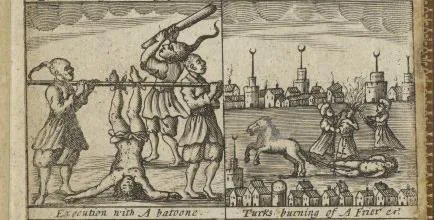
Image 1: One of several images upon the Frontispiece to William Okeley, Ebenezer (London, 1675), held by the Folger Shakespeare Library.
Custom Dissertation Writing Service
Need a history dissertation written to this standard?
Our subject specialists write to your exact brief — fully referenced, plagiarism-free and delivered on time, with a free plagiarism report.
Although captivity narratives include ‘political, religious, cultural and racial bias’, they are, as Colley points out, ultimately ‘combined with reportage that can be substantially verified’. Thus, it is cynical to treat these sources, as Matar and Vitkus have done, as nothing more than examples of imagined anti-Islamic “corsair hysteria”. Indeed, in one breath Matar and Vitkus are happy to damn accounts of coerced conversion and torture of British captives as merely insidious Anglican polemics but then use African Arabic writings to condemn the actions of Barbary ghuzats as religiously righteous. While British narratives such as Richard Knolles’s History of the Islamic World (1603) are said to be written through ‘anti-Islamic lens’, overstating the impact of Barbary piracy, the work of seventeenth century historian Ibn Abi Dinar’s Kitab al-Munis is said to objectively confirm that ‘English aggression led to Algerian counter aggression’. The level of bias scrutiny applied to British and European texts is not witnessed within Vitkus and Matar’s analysis on North African and Arabian writings, indicative of their unapologetic reverence towards North African sources, of which also very little remains.
Vitkus and Matar’s reliance upon theatrical works is also problematic as it almost totally omits the impacts of the Barbary corsairs upon British towns, especially coastal settlements. They utilise theatrical embellished works of the London theatre, like others before them, to render the impacts of Barbary piracy upon Britain as trivial and nothing more than a folkloric legend imbued with anti-Islamic sentiments rather than a real threat. For example, Sir Godfrey Fisher’s Barbery Legend (1957) contends that the North African regencies have ‘been the victims of history’, not the captured men, women and children of Britain nor the families they left behind. Although the theatres and playhouses of London undoubtedly provided an arena for moral correction toward the enslavement of Britons, precipitating demonising characterisations of the Islamic world, these perceptions are not where coastal fears of the Turks and captivity derived. These fears were local, real and traumatically inspired. A simple fact that has been grossly overlooked by Matar and Vitkus is how widespread the readership of these plays and texts were within the provinces of Britain. As Greenblatt’s ‘poetics of culture’ shows, in order for literary sources to be utilised to their full effect, not only must ‘the social presence of the world in the literary text’ be analysed but the ‘social presence’ of the literary text to ‘the world’ must also be assessed.
All the plays discussed by Vitkus were performed in London and, apart from the captivity narrative of Joseph Pitts, all the most famous seventeenth century captivity narratives were printed and sold in London. Considering that the book shops of cathedral towns such as York, Norwich, Exeter, Durham, Newcastle and Chester consisted predominantly of ‘prayer books, catechisms and school texts rather than the latest hits from the capital’, it is unlikely that these plays and auto-biographical books were disseminated widely among the provincial towns of both England and Ireland. According to Paul Trolander, issues surrounding carriage and cartage significantly ‘impacted the growth of book selling outside of London and the university towns’, and did so for the majority of the seventeenth century. The thirty-day delivery time from London to Barnstaple indicates that the readership of these captivity narratives and plays within the provinces would have been significantly less than that of London. Aside from printed texts, similarly, Charles I’s public ‘propaganda use’ of the successful expedition to Salé in 1637 was also predominantly confined to the streets and inhabitants of London. Thus, the fears of captivity among the populations of Plymouth, Baltimore, Barnstaple, Millbrook and Dungarvan stemmed from local and individual experiences; they were not simply imagined through printed works of “fabrication” from the capital.
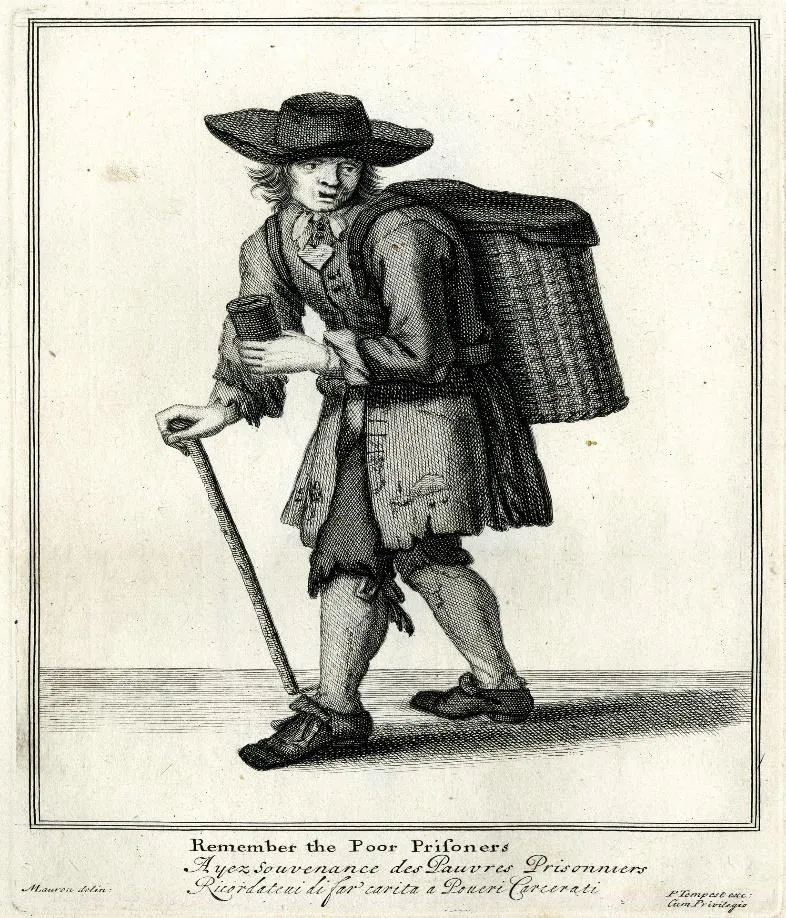
Image 2: Marcellus Laroon, The Cryes of the City of London (London, 1688), from the British Museum Collection
Subsuming the fears and anxieties of the British population as simply the derivative of ‘English modes of fabrication’ marginalises the lived experiences and trauma of those affected by Barbary piracy. Much like the pauper within Marcellus Laroon’s print, who laments the forgotten evils of Barbary piracy, this chapter seeks to ensure that the human cost of Barbary piracy is remembered and not dismissed as simply an imagined threat. Despite Iceland and Britain being similarly affected by the predations of land raids, while in Iceland the 1627 Turkish raid has found prominence within its national history, in Britain the exploits of the Barbary pirates are unknown.
At the start of the nineteenth century Nelson Annadale’s ethnographic study of the Faroes and Iceland stated that at ‘present day’ the Turkish Raid has ‘lost little of its horror in the eyes of their descendants’, as Annandale observed, the raids became a ‘daily’ point of conversation during his six weeks upon the island. The raids importance has permeated into the twentieth and twenty-first centuries. When Turkey and Iceland played football in 1995 the headline “Don’t let the Turks ravish us again!” was printed upon the most prominent Icelandic newspaper Morgunbladid. This chapter not only seeks to ensure that popular perceptions of the Barbary corsairs are underpinned by real experiences, but it also aims to revive these traumas that have been collectively forgotten by Britain.
The ‘razzias’ upon Baltimore in 1631 and Cornwall in 1625 irreparably devastated not only the lives of those taken, but also the lives of those left behind, with each name upon the captive list representing a deep personal tragedy. The hundreds of faceless names written upon captive lists oddly provide a more chilling reminder of the human cost of Barbary piracy than the fifteen captivity narratives; they are the forgotten captives who never came home. Unlike Francis Knight, Okeley and Rawlins, they could not utilise their captivity to reassert their freedom. In Baltimore Mr William Gunter’s wife and seven sons were taken from him while Stephen Broadbrook lost his pregnant wife Joane, two children and his third child to be. Similar stories of personal tragedy occurred in the wake of the land raids upon Cornwall in August 1625 and July 1640. The mayor of Plymouth writes of ‘80 mariners’ being taken from Looe while ‘27 ships and 200 persons taken’ from Cornwall during the summer of 1625.
While Edmund Rossingham, in a newsletter addressed to Edward, Viscount Conway, on the 4th of July 1640, stated that ‘those roguish pirates which lie upon the western coast have taken from the shore about Penzance, near St. Michael’s Mount, sixty men, women, and children’. It was the real aftermath of these land raids which ensured that ‘the threat of captivity was significant’ to those upon land, not only seamen and divers who feared being captured at sea, but whole populations. Indeed, these attacks were effectively invasions of British soil. In December 1631, six months after the sack of Baltimore, Captain William Thomas wrote a letter, unfortunately with no intended receiver, warning that ‘Mr Frizell your consul of Argier writes of another attempt that will made upon for parts of your coast next spring upon for which I wish for you to reside in some secure place’. Despite the hiatus in between land raids, the next land attacks occurring in 1640 and 1645 in which a cumulative three hundred people were taken captive, throughout the seventeenth century there persisted a constant fear of invasion by the Turk.
Indeed, the threat of the Turk to the West Country was not only troubling to the locals but also to the nation as a whole. Recognition of this can be derived from the Turkish ‘Expedition for England’ that was prophesised within an almanac named The Mystery of Ambras Merlin (1683). The almanac depicted the West Country as the entry point for a Turkish invasion to England, predicting that they would choose ‘to land on Severn side of Cornwall or Devonshire’. As Bernard Capp outlines, almanacs provided ‘a forum for the discussion of major contemporary issues’. Thus, the almanac’s recognition and concern of the Ottoman’s advance to the ‘walls of Vienna’ suggests that the Ottoman’s expansion ensured that fears of invasion were strong. Considering that during the 1660s annual almanac sales averaged four hundred thousand, it not only suggests that these predictions and concerns would have been widely read, but it also suggests the producer of this almanac recognised that the Turkish threat was a prominent concern of Britons during this period and thus he incorporated it into his prophecy.
As chapter one demonstrated, anxieties surrounding the Barbary corsairs manifested in relation to geographical position. The almanac aids in showing how contemporaries themselves recognised the differing threat levels of physical captivity between inland and costal populations. Indeed, in the face of invasion, the author prophesised for the ‘People on the Sea coasts to move themselves & all Provisions into the Inland Country’ with immediate effect. Only there would they be safe from the Turks while an ‘English Admiral or General in a Ship’ sunk the enemy to ‘the deep of the Severn Sea’. Contemporaries recognised that inland areas provided refuge and protection, while the coast was reckoned to be the realm of potential invasion and captivity. As there was no immediate threat of captivity to inland populations, they became enthralled by the wider spiritual concern of apostasy while those living on the coast predominantly feared physical captivity.
On top of emotional trauma and personal bereavement, the exploits of the Barbary pirates also greatly affected the socio-economic condition of those left behind in British coastal towns. Baltimore, had once been a ‘thriving place’ with pilchard fishery alone accumulating 20,000 L (£) a year; however, the raid had rendered it nothing more than a ‘miserable little village, crowned by the ruins of The O’Driscoll’s castle’. As a 1633 state report of commission demonstrates, the economic downturn caused by Barbary piracy not only impoverished towns but also furthered the socio-economic hardship for the families of those captured. Indeed, while the commission faced King Charles I with the macro-economic downturn of British shipping, instigated by the ‘decay of Trade and fishing in the most of England’, the ‘poore women’ of which ‘500 of their husbands, sons and friends were lately taken and kept in bondage’, faced the immediate economic consequences of poverty and reliance upon charity.
As the Bristol Merchant Venturers Treasurer’s Book shows in 1622 1li ,(£1), was paid to ‘goodwife Trippett…towards the relief of herselfe and children in their sicknes’ as a result of her husband being in ‘Captivitie in Algier’. Trippett’s poor socio-economic condition and reliance upon charity is emblematic of the realities that captives’ wives faced. Similarly, in 1686, five hundred miles away in Deskford, Scotland, 20 shillings was given to the ‘supplicants’ wives’ of those ‘merchants, taken be by the Turks’. As early as 1619, Bristol is pictured as economically ravaged by piracy. As the Merchant Venturers Book of Trade states: ‘in this sixe moneths last past have lost by Piracie and Shipwracke Five shipps of good burthen full fraighted with goodes’, resulting not only in the ‘restrainte of our trade’ and ‘manifould losses’ but also the loss of husbands. Indeed by 1619 the Merchant Venturers recorded a total of ‘700 widowes heere’. Public pressure for relief and redemption by the government grew.
In FitzGeffrey’s 1636 sermon he emotively recounts the conditions of those left behind, damning the government’s failure of preventing the Barbary corsairs’ attack on English vessels, recounting how one peer ‘with tearful eyes’ had promised to the ‘mournful wives and children of those oppressed captives’ to advocate their redemption to the King. It is important to acknowledge that it was not simply anti-Islamic feeling that fuelled concerns over the capture of English seamen, but also governmental incompetency. Commissioners at Plymouth wrote to the privy Council in July 1625 of the urgent need for a ‘speedy supply’ of food and equipment to soldiers that were ‘dejected of spirit’ while stationed upon the coast, tasked with the vital defence of the town from the ‘affreightments and daily terrors’ of the Turkish men-o-wars. These pleads for aid were routinely ignored. The navy’s constant failure in defending the coast was humiliatingly outlined in August 1625 as a ‘great compliant was made of piracies on the Western coasts, which were laid to the fault of the Lord Admiral’ George Villiers, the Duke of Buckingham, during a debate in the House of Commons.
In seeking to recount the impacts of Barbary piracy upon Britain, this dissertation is an attempt to bring light to an aspect of British history that has been largely overlooked and forgotten, hence its unfamiliarity among the British public. However, surprisingly this aim is not a recent one. Writing in 1897, W. Cramond stated that ‘when thinking of the Turk one is apt to forget that…Turkey was once the most powerful nation in Europe and for long spread the terror of its name not only in Europe but in Asia’, thus it is his aim to recollect the ‘untold sufferings’ of captives through Scottish archival sources. During the period 1700 to 1900, Britain’s relationship with and perception of slavery radically changed. Britons had been enslaved, been slave traders and the abolishers of slavery, yet, by 1900, the hardships and anxieties brought upon Britain by the North African slave trade, vividly outlined within chapter one, had largely been forgotten.
Captives’ ordeals of subjugation and slavery were deeply inconsistent with Britain’s solidified position as an ‘expansionist, triumphalist, and imperial’ power and challenged the pinnacle of James Thomson’s 1740 poem ‘Rule Britannia!’ that “Britons never shall be slaves”, an ironical sentiment considering its inception occurred while Britons remained subjugated in North Africa. Thomson’s poem is evidence that Britain’s identity was founded upon a self-asserted idealised and imagined triumphalism. Within Robert L. Playfairs The Scourge of Christendom (1884) and a letter he wrote to Cramond, he conveys his utter disbelief and embarrassment that Britons could have permitted the slavery of their own people:
‘It is more and more incomprehensible to me every day how the nations of Europe permitted this scourge to exist, especially as the Algerines never were strong, and it would not have required a very serious effort to have suppressed them at any period of their history’.
Playfair’s attitude toward the Barbary States indicates that Britain’s power relationship with the Islamic world, although changing significantly by the end of the nineteenth century, was also characterised by an enduring reverence for seventeenth century anxieties and perceptions. Although consistent with seventeenth century Britain’s demonisation of the Islamic world, describing them as an ‘infamous… rabble’, Playfair’s confident and dismissive attitude towards the Barbary States is evidence of the contemporary self-affirming attitude that Britain was and should have always been the champion of the seas. Indeed, Playfair is writing in hindsight of Lord Exmouth’s successful expedition to Algiers in 1816 which was heralded as a ‘glorious event’, not only ending European slavery in North Africa but confirming Britain’s long desire for hegemony over the Barbary States. Thus, he severely understates the strength of the Barbary corsairs and their impact upon Britain during the seventeenth and eighteenth centuries, both commercially and socially.
Despite launching numerous punitive expeditions upon the Barbary States, the liberty of Britons and freedom of its commerce continued to be attacked. Since the failure of Robert Mansell’s expedition to Algiers in 1621, William Rainsborough had blockaded Salé in 1637, Admiral Blake had bombarded Porto Farina in 1655, and efforts to regain Tangier in 1680 had left seven hundred British soldiers dead, including the Earl of Plymouth. Charles II made fervent attempts to establish a base upon the Barbary Coast, costing a monumental £70,000 a year, but it achieved little success, evidenced by the House of Common’s reluctancy to continue funding the expensive project and the fact that by early 1684 the British evacuation from Tangier had been completed. Playfair’s bias for British triumphalism led him to incorrectly conclude that Britain’s failure in stopping Barbary piracy was merely due to a lack of commitment, naively overlooking how prevalent and imminent a threat the corsairs had been.
For Playfair and Cramond, like most of nineteenth century Britain, they found it astounding that a nation of people, now so ‘low and in bad repute’, ever threatened the naval and commercial power of Britain and the security of its people. Indeed, during the nineteenth century, the Ottomans were regarded as the ‘sick man of Europe’. With these attitudes outlined in comparison with the “corsair hysteria” of the seventeenth century, it begs the question: how did such a prevalent threat to Britain in the seventeenth century become to be seen as trivial and almost forgotten by the late nineteenth century?
Central to the objective of this chapter is to determine how far Britain’s seventeenth century fears and anxieties surrounding Barbary piracy and the Islamic world permeated into the eighteenth and nineteenth centuries. Indeed, both Colley and Matar have argued that ‘Britain’s commercial and naval ascendancy’ during the eighteenth century marked an ‘important shift in the British attitude toward Islam and Muslims’. Also vital to the change in attitudes was the Ottoman Empire’s decline. Indeed, Locke’s A Letter Concerning Toleration (1689), which argued for the civil rights of Muslims, was published six years after the Ottomans’ failure to invade Vienna, an epochal end to their advance into Europe. According to Matar, the religious and cultural tensions that plagued British-Islamic relations during the seventeenth century became peripheral, as the Muslims of North Africa changed from the continual enemies of Britain to the ‘co-builders of the glory of Britain’, providing essential military aid during the Spanish Wars of Succession (1701 to 1714). For Matar, the eighteenth century was a period of change not continuity, in which Britain’s increasing desire for empire formed aimable transcultural links between Britain and the Barbary States. Mapping out the extent to which these changes occurred, not only provides insights into how and when the threat of Barbary piracy upon Britain changed but also how British perceptions of itself and the Islamic world changed from the seventeenth to nineteenth century.
In comparison to the nineteenth century, in which both Cramond and Playfair wrote, for the first half of the eighteenth century ‘Britons had not securely ruled the waves’, and the fears and anxieties of captivity permeated from the seventeenth into the eighteenth century. Despite constant efforts for peace between Britain and the Barbary States throughout the late seventeenth and early eighteenth century, British seamen were still routinely captured. Freidman contends that both ‘captive labour’ and ‘ransoms were…crucial to the Algerian economy’ during the eighteenth century. It was so vital to the economy that the regencies often reversed upon peace negotiations with European nations simply for monetary gain. Indeed, in 1711 the British lost £100,000 in shipping to Moroccan corsairs despite the two nations signing a formal peace treaty, and as such by 1720 it was recorded that three hundred men and women were currently held in captivity there, while in 1759 the number of British captives recorded was three hundred and forty.
Although these numbers do not equal the high levels of captivity during the seventeenth century, behind each of these individual statistics is a tale of anguish in which families were torn apart and personal freedom was stolen. Like the petition of Henry Abby and the other prisoners of Bristol from 1632, in 1737 William Maxwell from Kirkcudbright, (Scotland), writes of how fourteen months ago his ship was taken by Sally Rovers on its way to Amsterdam from the West Indies, in which himself, nineteen men and several women and children were ‘made slaves to this barbarous king’, and he pleads his uncle for aid in securing his freedom, sending love to his brothers and sisters, who may have never seen him again. Being a personal letter rather than a public petition, this plea for help does not utilise embellished claims of torture or sodomy to endear aid.
However, stories of Islamic torture, depicted most vividly within Francis Knight’s frontispiece, shown below, continued to be reported back to Britain during the eighteenth century. Indeed Anthony Hatfield, consul to Morocco from 1717 to 1726, wrote a letter to officials in London of a torture identical to that of Knight’s frontispiece. He stated that he had seen ‘a man hanged by his heels, with Irons upon his legs…and two men perpetually drubbing him and demanding money’. Whether this is true or embellished is not important; it is evidence that seventeenth century British depictions of the Islamic world continued to resonate within eighteenth century Britain despite their newfound cooperation toward building the British Empire. The vitality of ransom money to the Barbary States ensured that stories of anguish would continue to invoke reaction and retribution from Britain and the continued interest and utility of the captivity genre demonstrates this.
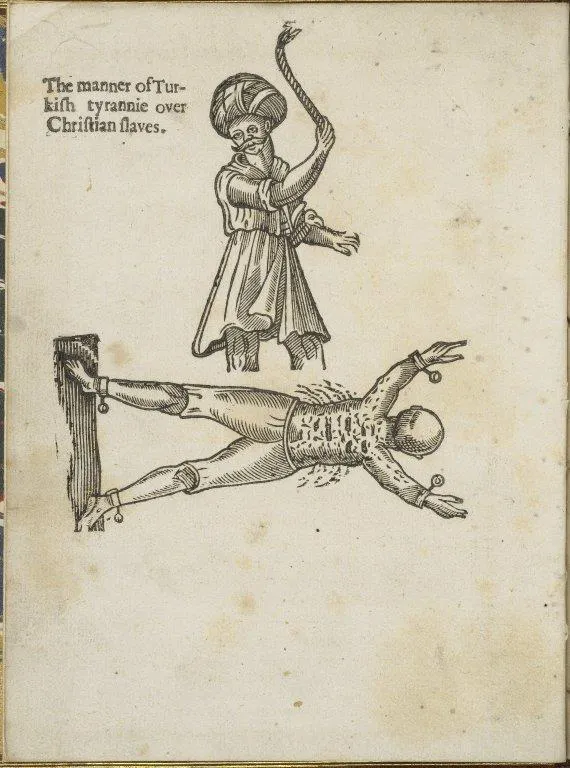
Image 3: Frontispiece of Francis Knight, A relation of seaven years slaverie under the Turkes of Argeire (London, 1640), held by the Folger Shakespeare Library.
The popularity of the captivity genre from the seventeenth century extended into the eighteenth century. Like the narratives of the seventeenth century, not only were these stories of subjugation turned into ones of triumph, but anxieties surrounding cross-cultural contamination and apostasy continued to resonate throughout their texts. Similar to the fictional play The Renegado, Daniel Defoe’s inspired but fictional Robinson Crusoe (1719) also made evading capture a centrepiece of its tale. Furthermore, A True and Faithful Account of the Religion and Manners of the Mohammetans (1704) written by Joseph Pitts was foremost a public atonement for his conversion to Islam during his captivity and fifteen years in North Africa. The hatred for renegados, displayed in A Christian Turned Turk and ballads such as The Algier Slave’s Releasement ensured that Pitts wrote for and hoped for ‘the restitution and reparation for my past defection’.
Indeed the need to publicly convey the evil of apostasy increased from the seventeenth century to the eighteenth century despite Matar viewing this period as a time of transcultural exchange. Although the ‘Laudian Rite for Returned Renegades’ (1637) existed, there are no records which verify that it occurred. In comparison, articles from both the Daily Post and Daily Journal talk of the ‘vast multitudes of people that crowded to see’ the redeemed captives during the rituals that took place at St. Paul’s Cathedral in 1721 and November 1734. Similar celebrations of the 1637 Salé expedition, almost a hundred years prior, itself focussed more upon asserting Britain’s naval supremacy rather than damning apostasy and publicly reintegrating the captives back to their native land. These ceremonies are evidence of the continuing process of othering Islam, demonstrating how British identity was “self-fashioned” in direct comparison to the Islamic world. Indeed, in Mary Baber’s poem On Seeing the Captives (1734) Britain is pictured as the ‘Land of Liberty’ while Nicholas Amhurst depicts Mohamet’s Kingdom as a ‘crafty kingdom’, full of ‘celestial vice’. These poems are emblematic of Topinka’s conclusion that ‘conceptions of the self cannot exist without the Other’.
Whilst fears of apostasy and British self-assertion continued to dictate captivity accounts and public spectacles, the emerging potency of Britain and the declining influence of the Ottoman Empire did however lead certain anxieties and perceptions of the Islamic world to fade away. The Turks predilection for sodomy had been an essential ploy to demonise the Turk during the seventeenth century. Numerous petitions, like Henry Abby’s, and captivity narratives such as Francis Knight’s, all promoted the rumour that the Turks enjoyed ‘to commit Sodomie with all creatures’, and in 1614, even one member of parliament told the house that ‘children taken’ by the corsairs were ‘kept for buggery and made Turks’. While the term “corsair hysteria” should not be overstated, as Vitkus and Matar have done, the fact that claims of sodomy disappear with British ascendency suggests that it was largely a myth, a ‘metaphor’ for the insecurity that Britain felt in the presence of the powerful Ottoman Empire.
Indeed, the fear of sodomy attached to the Turks during the seventeenth century was also attached to a range of other imagined threats. Within James I’s Basilikon Doron (1599), the ‘horrible cyrmes’ of ‘Witch-crafte’ were placed in reference to ‘Sodomie’ and extended to other forms of dark magic including demons and werewolves. Indeed, the lustfulness of the Turk and their insatiable habit for harems and concubines has been thoroughly challenged by Fatiha Loualich. In her study of thousands of inventories, she only found twenty examples of polygamy, with men ‘very rarely owning concubines’. Although the label of sodomite fell out of favour, this was only a partial shift in British perceptions.
Despite the economic assistance and military cooperation between Britain and Morocco, Algeria and Tunisia during the War of Spanish succession, anti-Islamic Protestant polemics permeated with great popularity into the eighteenth century. Indeed, the aim of Alexander Ross’s first translation of the Quran to English was not to objectively inform but to ‘confirm in thee the health of Christianity’ as ‘so faced with contradictions, blasphemies, obscene speeches and ridiculous fables’, was the Quran. Promoting these sentiments into the eighteenth century was Humphrey Prideaux’s scathing analysis of Islam, which enjoyed widespread success, with nine editions published from 1697 to 1730 in both England and Ireland. Prideaux’s characterisation of Islam as the ‘firebrand of Hell’ was predicated upon an aim to make converts ‘see the error of their apostasy’ and curtail the ‘prevailing infidelity of the present age’, anxieties of the Islamic world that had been repeatedly displayed within plays and captivity narratives.
In conjecture with the cultural relativism preached by oriental linguists Simon Ockley and Lady Mary Montagu Morgan during this period, Prideaux refused to succeed Edward Pocock as Laudian Professor of Arabic, partly because he ‘nauseate[d] that learning’. Similarly, in his attempt to distance himself from his conversion to Islam, Pitts too conveyed disgust at the ‘vulgar sound’ of the Arabic language. William Ockley’s attempt to make Britons aware ‘of the folly of the westerlings in despising the wisdom of the Eastern nations’ was dismissed and uncelebrated, forcing him into ‘penury’.
The success of Prideaux’s anti-Islamic rhetoric, in comparison to the cultural relativism of William Ockley, indicates that Matar overestimates the extent to which British perceptions of Islam changed during the eighteenth century. As Mark Netzloff states, the rituals of ‘conversion and incorporation’ at St. Paul’s during the mid-eighteenth century ‘were used to reify cultural borders’, ensuring that the Islamic world remained the antithesis of Britain. Indeed, the stated aim of William Berriman’s sermon at St Paul’s for returned captives in 1721 was to ‘release them from their bitter servitude and restore them to their native country’. Poems, sermons and public spectacles all presented Britain as the land of Liberty and the Ottoman Empire as the realm of subjugation of tyranny. The move towards transcultural cooperation by Locke and Ockley continued to be downtrodden.
This suggests that Anglo-Islamic relations were not simply dictated by commercial or colonial interests or a change in geopolitical power. The discrepancy within nineteenth century attitudes toward the Barbary States is evidence of this. Many British newspapers argued against Lord Exmouth’s 1816 attack upon the Barbary pirates, claiming that Barbary piracy was an economic and commercial ally to Britain, their predations reducing competition whilst letting Britain’s trade flourish. Indeed, The Quarterly Review saw the expedition as an ‘act of madness’. Despite this, an article published by Public Ledger and Daily Advertiser still perceived the Barbary pirates as an imminent threat, stating that the British Channel was still ‘swarming…with these Barbarians’.
Seventeenth century attitudes also extended into modern British perceptions of Islam. Indeed, in writing of the city of Algiers, an article published by the Aberdeen Daily Journal in 1907 described ‘oriental ornament’ as ‘showy, barbaric and profuse’, characterising the city as ‘diametrically opposed to western methods of thought and action’. The practice of othering Islam during the seventeenth century, predominantly fuelled by Barbary piracy, had long term impacts and this fact has been overlooked when studying early modern Anglo-Islamic relations. This puts into question the claim that by the start of the eighteenth century the exploits of the Barbary pirates were already ‘becoming only a memory and tradition’. Thus, the process of “forgetting” the sufferings and fears of Barbary captivity began not at the start of the eighteenth century but much later, making its eradication from national memory a swift occurrence, not a long durée.
This dissertation is foremost a study of the impacts of Barbary piracy upon the British Isles during the Early Modern period. By firstly outlining the discrepancy between coastal and inland anxieties during the seventeenth century, chapter one demonstrated how the ambiguous term “corsair hysteria”, falls drastically short in encapsulating Britons’ fears of the Barbary corsairs. Whilst plays and captivity narratives of the seventeenth century were indeed influenced and directed by Protestant polemics and Anglo-Christian triumphalism, these imagined and embellished stories were not where coastal fears derived from. Not only were spiritual fears of apostasy outweighed by a greater concern for bodily captivity, but the limitations of carriage and cartage suggest that provincial readership of these ideological texts were low. To this effect, it can be asserted that Barbary piracy was indeed a real threat to Britain, not merely the result of an ideological othering. However, this chapter also began to demonstrate how British perceptions and anxieties of the Islamic world, both imagined and real, did begin to shape Britain’s national identity around a patriotic desire for commercial, and naval supremacy.
Continuing from the premises of chapter one, chapter two sought to uncover the impacts that Barbary predations had upon the lives of seventeenth century Britons, from the West Country to Ireland and Scotland. The sources utilised in this chapter acted as a direct comparison to the more overtly embellished sources analysed in chapter one. The simple names and numbers of individuals taken in land raids and monetary destitution of captives’ wives, recorded in letters and treasurer’s books, provided a stark contrast to the heroic captivity narratives of Knight, Okeley and Rawlins. The approach utilised in chapter two sought to combat Matar and Vitkus’s tendency to predominantly consult narratives of triumph rather than tragedy, as this has led them both to overstate the existence of “corsair hysteria”.
The attitudes of Cramond and Playfair, outlined at the start of chapter three, acted as a microcosm of late nineteenth century attitudes towards the Islamic world. Imbued with sentiments of self-triumphalism, their attitudes are evidence that by the nineteenth century Britain’s idealised status as the sovereign of the seas had become reality. Hence their naivety in dismissing the strength of the Barbary States. In recounting to see how this change in attitudes occurred, it becomes clear that Matar overstates how far Anglo-Islamic transcultural relations changed during the eighteenth century. The process of othering Islam, that had begun in the seventeenth century, had succeeded in permeating anti-Islamic rhetoric into the eighteenth and nineteenth centuries.
Through the process of recollecting the impacts and anxieties that these predations manifested, it becomes clear that this largely forgotten aspect of British history provides a vital framework through which the historian can understand the complex relationship between British identity formation and the othering of the Islamic world. While this has been recognised by certain scholars, predominantly, Matar, Fisher and Vitkus, their works have had a tendency to neglect showing the real human cost of Barbary piracy, subsuming the lived experiences and trauma of corsair victims under the reductive term of “corsair hysteria”. This work has sought to outline their shortcomings and rectify them. Although the othering of Islam did occur in tandem with the formulation of British identity, this does not however mean that the predations of Barbary pirates can be simply dismissed as an imagined threat. By geographically mapping the discrepancy between inland and costal anxieties, this work not only provides a novel approach in studying the impacts of Barbary piracy, but it demonstrates that the Barbary corsairs were simultaneously an imminently real threat and an embellished enemy.
Vital to the aim of this research was to ensure that seemingly transparent and cynical popular perceptions of the Barbary corsairs were underlined by the traumas and lives lost to their predations, which have faded away from British memory. Indeed, as chapter three outlines, this process of collective amnesia was swift. In 1816 Britain had waged an expensive expedition upon Algiers to end slavery, but by 1900 the effects of this slave trade had largely been forgotten. Thus, this work also provides the necessarily stimulus for further research into how and why these predations were erased from British national memory.

All work is written by human writers. 100% AI free, guaranteed.

100% money back guarantee if you find plagiarism in our work.
COMPANY DETAILS