




As technology becomes more digital every day, AI is becoming the most important and transformative technology. From your smartphone’s voice assistant to making sophisticated medical diagnoses, it is being used in all aspects of life. As such, for the next generation of people, it is not enough to simply know about artificial intelligence as a specialized skill. Rather, it should be understood by the masses as basic literacy.
Popular Online Platforms for Kids’ AI Learning
The purpose of this article is to provide a detailed review of some of the best artificial intelligence courses for beginners created specifically for kids. These courses will allow the children to develop the critical skills necessary to thrive in the tech-centric environment that they will face in the future, including problem-solving, critical thinking, and digital fluency.
CodeMonkey
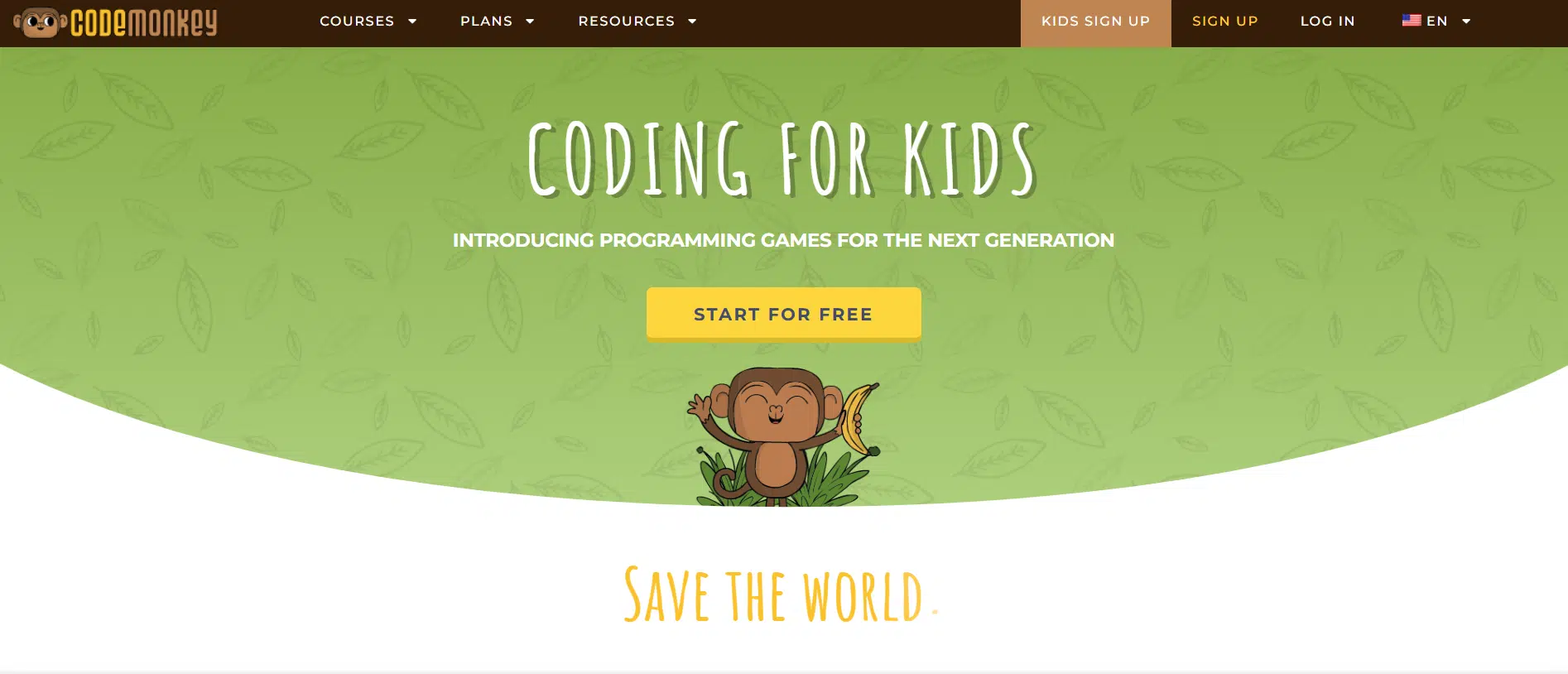
Using a fun and interactive environment, CodeMonkey is a way for children to learn how to code and also what they need to know about computer science. Using both block-based coding as well as text-based coding (CoffeeScript / Python), it takes children on an exciting journey of learning to program in a manner that transitions them from using blocks to writing their own lines of code.
Alongside the computer programming skills, CodeMonkey provides an AI curriculum designed to introduce elementary school-age students (5th-8th grade) to the introductory aspects of learning about artificial intelligence through fun and engaging experiences. There are 16 lesson plans available to help students learn the many foundational concepts of AI.
Foundations & Generative AI
The first part of the course lays down the foundational knowledge of AI, as well as exposes the students to the most recent generative models:
-
Understanding AI & Ethics: Students understand what differentiates Artificial Intelligence/Machine Learning from traditional programming and the ethics behind AI, specifically, how to address data privacy issues, and inherent biases within algorithms.
-
Generative AI: This part of the course teaches students what generative models can do, i.e., create new content. The students will learn about the mechanics of Language Models (like ChatBots) and Image Generation Models (like DALL-E).
-
Practical Skills (Prompt Engineering): Students will learn the important skill of writing effective commands for AI systems and develop their skills using Prompt Engineering strategies and techniques to receive the best possible output from their AI models.
Mechanisms Of Machine Learning And How AI Works
In this segment, the class will delve into the foundational elements of machine learning as well as how it works internally:
-
Paradigms of Machine Learning: Students will study the methods by which machines can be trained to perform tasks and the three primary paradigms of machine learning: supervised learning, unsupervised learning, and reinforcement learning.
-
Internal Mechanics of Artificial Intelligence: Students will learn about the internal mechanisms of artificial intelligence, with emphasis placed upon the critical element of data within the process of creating an artificial intelligence model.
From Theory to Practice
The third segment is focused on applying the skills and knowledge gained throughout the semester to actual projects that involve developing and creating:
-
Building an AI Model: Using webcams for image/pose detection, students will build and develop a simple model using real-time information while also ensuring a safe and COPPA-compliant environment.
-
Integrating the Developed AI Model With A Game: The developed AI model will be integrated into a program so students may develop and design a custom game or unique and fun interactive experience.
-
A Creative Final Capstone Project: For the final and most challenging aspect of this course, students will use their knowledge of machine learning and programming to develop a final, personal, and innovative project that will allow them to demonstrate all they have learned throughout the semester.
In addition to being educational, CodeMonkey successfully combines education and fun. The company’s AI course offers a well-rounded, project-based overview of machine learning and generative AI tools in a gamified and self-paced environment that is also a safe space.
Codingal
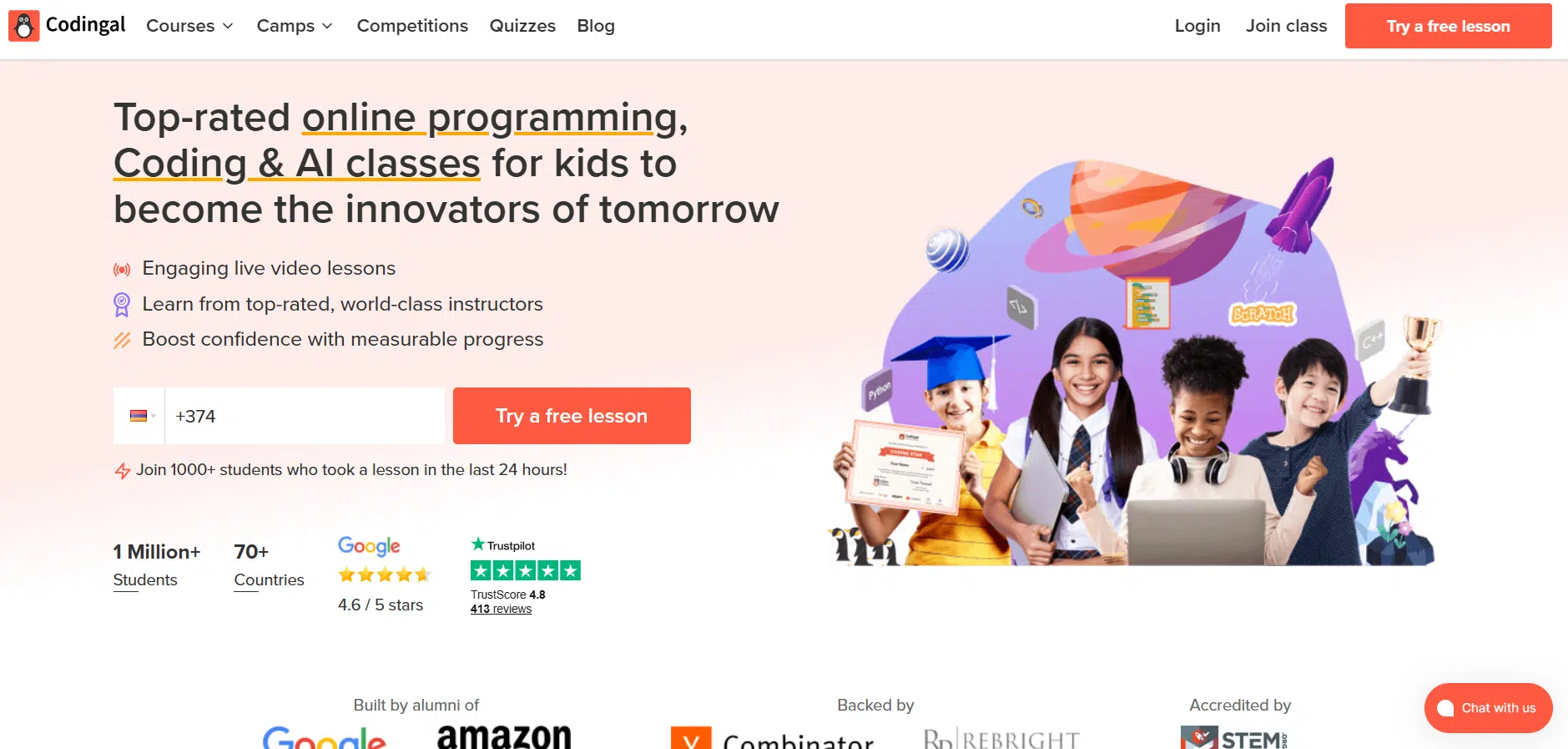
Codingal provides individualized online coding lessons with experienced instructors. Codingal utilizes this instruction as a way to personalize the course material to meet your child’s needs in terms of speed and interest, allowing them to gain a complete and full comprehension of advanced topics such as AI.
Detailed Beginner AI Course Focus
Codingal uses AI within its customized learning paths to ensure that young students have a solid foundation in coding prior to moving on to AI. The platform provides four flagship programs that incorporate Artificial Intelligence and Machine Learning in a variety of ways:
-
AI & Coding Grandmaster (Grades 1–12): This program is the most extensive and will provide 144 lessons and over 350 activities.
The Grandmaster program is designed for students looking to be skilled coders with the ability to add AI capabilities to develop engaging and interactive applications, games, and websites.
-
AI & Coding Prodigy (Grades 1–12): A slightly shorter version of the Grandmaster program; this will offer your child 96 lessons and more than 180 activities.
The prodigy program is designed for students who wish to excel at coding, design, and build amazing websites, games, and applications with a focus on future technology such as AI.
- AI & Data Science for Teens: A special version of the program, specifically designed for older teens; this focuses on the connection between AI and data science.
This course introduces fundamental Data Science concepts.
This version of the program is specifically designed for older teens. This focuses on the connection between AI and data science.
Its solid foundation of teaching coding, combined with its ability to introduce AI as a separate subject, will allow students to build a comprehensive set of skills that are guided by an experienced instructor.
Edoxi
Edoxi’s AI course successfully unites visual programming and high-level concepts such as machine learning and Python-based AI development. The structured course plan for Edoxi makes abstract AI ideas tangible and actionable for young students.
AI Course Details
- Module 1: Introduction to AI and Scratch: Everyday Examples of AI + Basic Game or Animation Development with Scratch: Students will learn the basics of AI and create basic games and animations with Scratch.
- Module 2: Building Logic in Games and Stories with Scratch: Teaching students the fundamentals of coding logic and developing projects utilizing the visual programming platform Scratch. Students will be able to prepare themselves to integrate machine learning concepts learned in later modules.
-
Module 3: AI Fun with Machine Learning: Teaching Machine learning basics: how computers find patterns. Using pre-trained models and integrating them into scratch projects.
-
Module 4: Scratch + AI Code 101 – Introduction to AI Model Types: Learning about different types of AI models (text, image, sound). Building intelligent projects in Scratch using previously trained models.
-
Module 5: Visual AI with Teachable Machine + Scratch: Teaching students to train their own AI models using images, sounds, and pose data with Teachable Machine. Students create scratch characters that can be controlled by AI.
In summary, Edoxi offers an effective path for young students to develop practical knowledge of AI. Edoxi ensures that students receive hands-on experience developing models with real-world accessible platforms.
Final Thoughts
Now is the time to develop the foundation for your child’s ability to acquire basic AI literacy. Preparing students for their future begins with introducing young children to Artificial Intelligence (AI). These educational programs offer a much-needed springboard for learning by providing opportunities for young students to transition from being consumers of information passively to being creators actively.
Through hands-on projects that promote critical thinking and problem-solving, students learn how to build, train, and responsibly utilize actual AI tools they will encounter in the workforce. Enroll your child today and secure their future in an increasingly automated workplace.
Frequently Asked Questions
CodeMonkey is an online platform that teaches kids coding through interactive, game-based lessons
It’s designed for students in grades K–8, including complete beginners.
CodeMonkey teaches text-based coding using CoffeeScript and Python.
No, students can start with no previous coding knowledge.
Yes, it works entirely online with no downloads required.
Yes, CodeMonkey offers plans for schools, teachers, and families.
Limited content is free; full access requires a paid subscription.
Codingal is an online platform that teaches kids and teens coding through live classes.
Ages 6–18, beginners to advanced learners.
Languages like Scratch, Python, and web development.
Live, instructor-led online sessions.
Yes, Codingal works for both individual learners and schools.
Edoxi is a professional training institute offering a wide range of online and in-person courses to help learners build career skills and gain certifications.
Individuals, professionals, and corporate teams looking to improve job-related skills or earn recognised certificates.
Edoxi provides courses in areas like software and technology, cybersecurity, AI, data analytics, and more.
Լearners receive professional certification upon completing Edoxi’s courses.





